
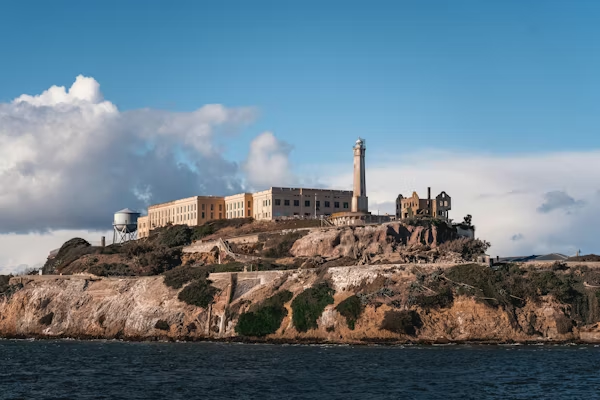
 Alcatraz. The name itself conjures horrifying imagines of cold jail cells, stark and barren walls, hardened criminals, and a reputation that nobody can escape from this federal prison. Some of the things I learned while studying provides a more comprehensive picture of this historical landmark.
Alcatraz Island is 1½ miles off the coast of San Francisco. The 22-acres were converted into the Alcatraz complex which included the prison, housing for the guards and their families, as well as a public school for the kids of the prison staff. “Families enjoyed their own bowling alley, small convenience store, and soda fountain shop for the younger island residents.”1
Criminals like Al Capone, Machine Gun Kelly, and Robert Stroud (The Birdman of Alcatraz) were housed here along with other notorious murderers and thieves. Surprisingly, criminals wanted to come to Alcatraz. Here, there was only one roommate per 5 feet by 9 feet cell, and the food was considered some of the best according to prison standards of cuisine. The biggest complaints about Alcatraz prison were that it tended to be a very cold prison and that the inmates didn’t not like the rule of silence.
Alcatraz had the reputation that there were no successful escapes. “There were only 14 attempts in the 29 years the prison operated. Of the 36 men who tried, and that includes two who made two attempts, 23 were caught, six were shot and killed, and two drowned.”2 Bank robber John Paul Scott came the closest to an actual escape. In 1962, he “made it to the shore. However, he was so weary that police found him unconscious and in hypothermic shock.” After a stay in the hospital, he was returned to Alcatraz.3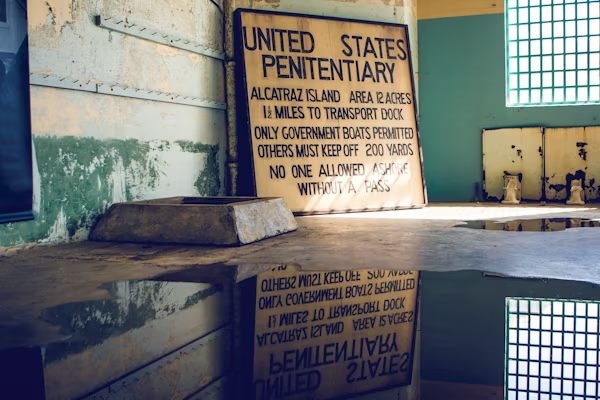
“The prison closed on [this day in] 1963 due to high operational costs, particularly because supplies had to be transported by boat, making it nearly three times more expensive to operate than other federal prisons. “For example, the island had no source of fresh water, so nearly 1 million gallons of water had to be barged to the island each week,” states the Federal Bureau of Prisons.”4
Islands have been used for a long time as prison islands. Revelation 1:9 says, “I John, who also am your brother, and companion in tribulation, and in the kingdom and patience of Jesus Christ, was in the isle that is called Patmos, for the word of God, and for the testimony of Jesus Christ.”
“Roman authorities sent John to Patmos due to his preaching about Jesus Christ and because he refused to worship the Roman emperor… Rome didn’t want to execute every person who offended the worship of the emperor, so the imperial officials would exile people to a remote island. Exile removed them from society but prevented them from becoming martyrs and inspiring others.”5
According to Bible commentator David Guzik, “[Patmos] was used as a prison island and functioned as a jail without bars. The island was rich in marble, and most of the prisoners were forced laborers in marble quarries. Patmos was a rocky, desolate island about 10 miles long and 6 miles wide.”6
John didn’t waste his time on this island. We know that this is where the book of the Revelation was penned. He spent time in worship. Revelation 1:10 says, “I was in the Spirit on the Lord’s day, and heard behind me a great voice, as of a trumpet.” And, it would be safe to assume that John was a missionary to the prisoners of Patmos. That leads me to a closing point.
We have more in Scripture about Paul being in prison than we do about John. We know what Paul did in prison and do not have to assume. He wrote and he witnessed.
Today, my guess is that the majority of the devotional readers are not sitting in a jail cell reading through these pages. But, you might be in a prison of sorts. You could feel imprisoned in a marriage that is falling apart and where love is absent. You may feel imprisoned in a job that you desperately need but it is draining the life out of you. You might be imprisoned in a body that has succumbed to age or illness and is rapidly disintegrating.
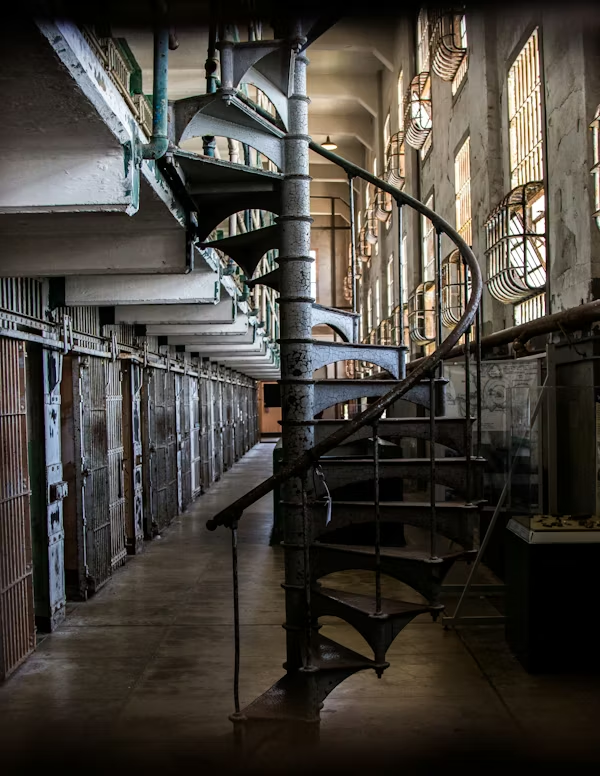 What will you choose to do while you are in that prison? The choices are limited. You can choose to cry, whine, or complain. You can choose anger and bitterness. You can plan revenge against those who helped to put you in this prison. You can plan an escape – but it will most likely backfire on you. Or you can make some Biblical choices. Consider these final two passages of Scripture:
Acts 16:25 And at midnight Paul and Silas prayed, and sang praises unto God: and the prisoners heard them.
2 Corinthians 12:8-10 For this thing I besought the Lord thrice, that it might depart from me. (9) And he said unto me, My grace is sufficient for thee: for my strength is made perfect in weakness. Most gladly therefore will I rather glory in my infirmities, that the power of Christ may rest upon me. (10) Therefore I take pleasure in infirmities, in reproaches, in necessities, in persecutions, in distresses for Christ’s sake: for when I am weak, then am I strong.
1https://www.alcatrazhistory.com/factsnfig.htm
2https://www.nbcboston.com/news/national-international/alcatraz-size-facts-prison/3704705/
3https://en.wikipedia.org/wiki/John_Paul_Scott
4https://www.history.com/this-day-in-history/march-21/alcatraz-closes-its-doors
5https://www.christianity.com/wiki/end-times/what-happened-on-patmos-in-the-bible.html
6Enduring Word Commentary, Guzik, David, e-Sword.net module.
Images are taken from https://pixabay.com/, https://www.pexels.com/, or https://unsplash.com/images or created in Windows Copilot. According to the websites, they are Royalty Free and free to be used for our purposes.
