

 On August 27, 1964, a young Julie Andrews declared, “In every job that must be done, there is an element of fun.” The famous movie was Mary Poppins and the children, Jane and Michael, were being told to clean a messy room that they really didn’t want to clean. To make her point, Mary Poppins broke into the song A Spoonful of Sugar and she sang that it “helps the medicine go down.”
We live in a world where we are told that sugar is bad. Cancer allegedly feeds on it. Sugar makes you fat. Sugar causes diabetes. Sugar leads to heart disease. Sugar rots your teeth. Sugar causes acne. I even read where sugar is linked to depression. Now, I don’t agree with that. I’ve never seen someone eating a donut, candy bar, a piece of pie, or a bowl of ice cream that looked depressed. Just the opposite. They look quite happy. However, I’ve seen a lot of gloom and despair on the faces of those who have had those things taken away from them! When you’re feeling the need for a bowl of ice cream, some Oreos, or Nutter Butters and you can’t have them, you don’t walk away and say, “Oh, goodie! I’m sure I’d feel much better if I just snacked on a carrot.” Said no one ever!
It might surprise you to know that sugar was once used medicinally as aspirin is today. “The sweet stuff wasn’t just an add-in — it was often the featured ingredient in healing remedies believed to cure all kinds of ailments. Sugar was used to treat sickness and injury as far back as the first century, when Middle Eastern practitioners prescribed it for dehydration, kidney issues, failing eyesight, and more. During the 11th century, English monks noted sugar’s ability to soothe upset stomachs and digestive issues, and by the Middle Ages doctors tried treating bubonic plague with concoctions of hemp, sugar, and more unpleasant ingredients. As recently as the 1700s, pharmacists recommended a glass of lemon juice and sugar water for asthma attacks.”1
So where did the writers of Mary Poppins come up with the idea for A Spoonful of Sugar? “The ditty takes its inspiration from children’s vaccines. Songwriter Richard Sherman penned the tune after hearing how his son received the oral polio immunization on a sugar cube.”2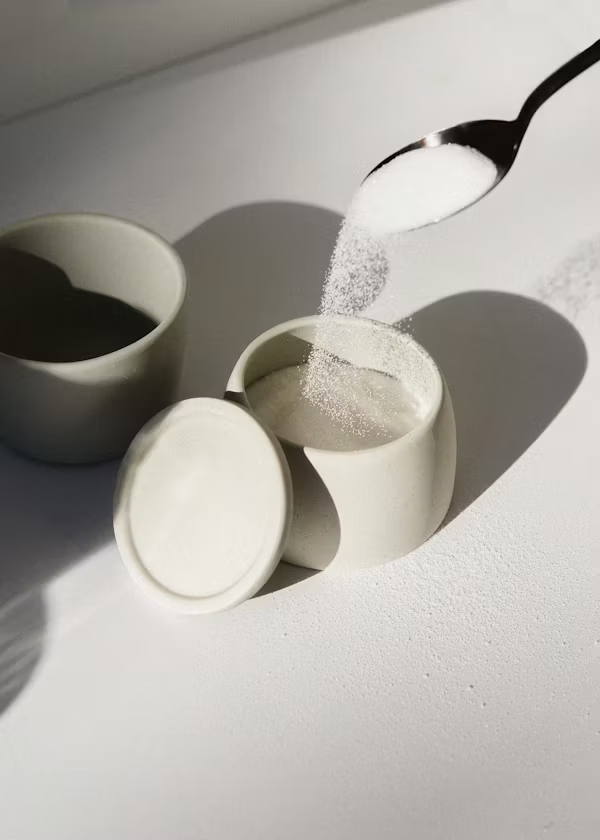
The Bible only mentions the word “medicine” four times. Other references, though, refer to balms or ointments used medicinally for healing. The word sugar is never found in the Bible. Instead, we read the word “sweet” 108 times and honey, a natural sweetener, 58 times. Other fruits are mentioned which all contain sugars.
There are plenty of folks in our world that are sour, bitter, or salty. Some are as hot-tempered and spicy as a Carolina Reaper pepper. We are in desperate need of a lot more sweetness and this is something that Christians can deliver.
Let’s start with our attitudes. Colossians 3:12-14 tells us to “Put on therefore, as the elect of God, holy and beloved, bowels of mercies, kindness, humbleness of mind, meekness, longsuffering; (13) Forbearing one another, and forgiving one another, if any man have a quarrel against any: even as Christ forgave you, so also do ye. (14) And above all these things put on charity, which is the bond of perfectness.” All of these descriptors are to be reflected in our attitudes toward others as well as our attitudes toward the day at hand.
Next, let’s consider our words. Proverbs 16:24 says, “Pleasant words are as an honeycomb, sweet to the soul, and health to the bones.” Are we known for sweetness in our speech? I’m not talking about the syrupy, sappy drizzle that comes across fake. I’m talking about a genuine kindness in our words that permeates all of our conversations.
And let’s not forget to back up our words with action. Philippians 4:18 says, “But I have all, and abound: I am full, having received of 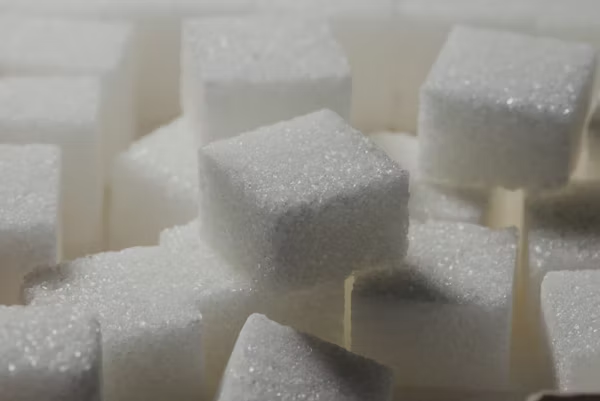 Epaphroditus the things which were sent from you, an odour of a sweet smell, a sacrifice acceptable, wellpleasing to God.”
As Christians, let’s decide today to be that spoonful of sugar that someone needs. To help remind us to be sweet, start the day in God’s Word and enjoy a bit of His sugar. “How sweet are thy words unto my taste! yea, sweeter than honey to my mouth!” (Psalms 119:103)
1https://interestingfacts.com/fact/sugar-used-to-be-prescribed-as-medicine/?lctg=e6fd7449-4b4d-4d27-9340-7ad6e03075f2
2Ibid.
Images are taken from https://pixabay.com/, https://www.pexels.com/, or https://unsplash.com/images or created in Windows Copilot. According to the websites, they are Royalty Free and free to be used for our purposes.
