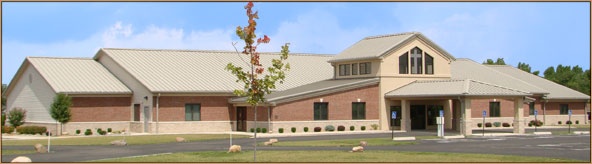

 Throughout the United States, this week has been designated as National Police Week. It runs from May 10-16. The week long celebration began on a more somber note.
- 1962 – Presidential Proclamation: President John F. Kennedy signed Public Law 87-726, designating May 15 as Peace Officers Memorial Day and the week in which it falls as Police Week. This marked the beginning of a national tradition of honoring our nation’s fallen officers.
- 1982 – First Memorial Service: The first official Peace Officers’ Memorial Service was held in Washington, D.C. It was a modest gathering at Senate Park hosted by the Fraternal Order of Police, and it set the foundation for the National Peace Officers Memorial Service that continues today.
- 1984 – The National Law Enforcement Officers Memorial Fund (NLEOMF) was created to establish a permanent memorial for fallen officers. That same year, Concerns of Police Survivors (C.O.P.S.) was founded, providing crucial support and community for the families and colleagues left behind.
- 1991 – The National Law Enforcement Officers Memorial was dedicated in Washington, D.C., with the names of over 12,000 fallen officers engraved. Today, the wall bears the names of more than 24,000 officers who gave their lives in service.
- Today – National Police Week now draws tens of thousands of officers, survivors, and supporters to Washington, D.C., each May. Signature events include the Candlelight Vigil, hosted by NLEOMF, and the National Peace Officers’ Memorial Service at the U.S. Capitol host by the Fraternal Order of Police. Communities across the country also hold their own observances, ensuring that the sacrifices of law enforcement are never forgotten.1
In 2025, it was estimated that there were over 704,000 law enforcement officers, spanning across federal, state, and local jurisdictions. Interestingly, 46% of law enforcement departments have under 10 officers.2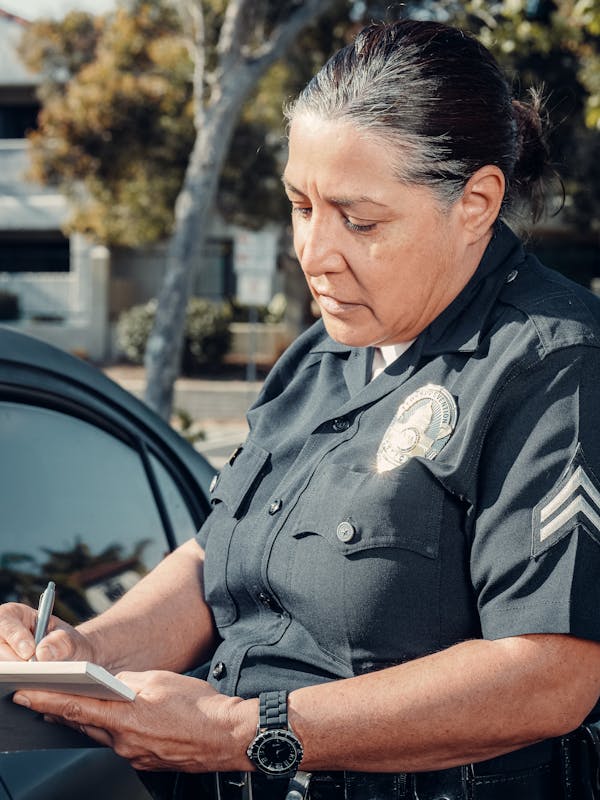
“The number of law enforcement professionals nationwide who died in 2025 decreased 25% compared to the same time period last year, according to preliminary data provided by the National Law Enforcement Officers Memorial Fund (NLEOMF). The NLEOMF data shows that 111 federal, state, county, municipal, and U.S. Territories officers died in the line of duty in 2025, representing a 25% decrease compared to the 148 officers who died in 2024.
“The 111 line-of-duty deaths in 2025 represents a near-historic low. The last time annual officer fatalities were at a comparable level was in 1943, when 94 officers were killed in the line of duty.”3 They will be honored this Friday at memorial services held in Washington, D.C.
I will be honest about something. Whenever a first responder levy comes up for a vote that involves raised taxes, that is one I will vote for every single time. Our first responders cannot be taken for granted and should be well compensated for the hazardous jobs they do on our behalf. Currently, NONE of them are paid enough!
Statistics show that the public attitude towards law enforcement is improving. However, there is still a large faction of society that is being schooled, especially through social media platforms on how to respond to officers asking you to produce ID or pulling you over for a traffic stop. Passive resistance or non-compliance techniques foster an attitude of superiority over authority figures, disrespecting their role in society and in our lives.
One of our go-to passages that addresses how we should respond to these authority figures is found in Romans 13:1-4. “Let every soul be subject unto the higher powers. For there is no power but of God: the powers that be are ordained of God. (2) Whosoever therefore resisteth the power, resisteth the ordinance of God: and they that resist shall receive to themselves damnation. (3) For rulers are not a terror to good works, but to the evil. Wilt thou then not be afraid of the power? do that which is good, and thou shalt have praise of the same: (4) For he is the minister of God to thee for good. But if thou do that which is evil, be afraid; for he beareth not the sword in vain: for he is the minister of God, a revenger to execute wrath upon him that doeth evil.”
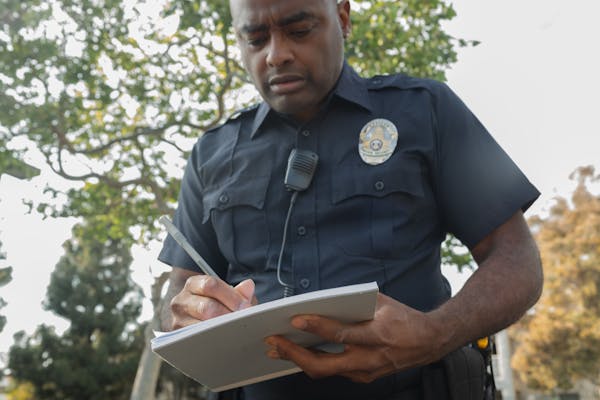 Hopefully, we will not need or meet an officer in an official capacity this week. However, should you happen to run into one casually, how about thanking them for their service to our community? Show them the love and appreciation they deserve. And should red and blue lights appear behind your car, pull over and prepare to be truthful and compliant with grace, not argumentative and belligerent. If a citation is issued, surprise the officer and thank them for doing their job.
1 Peter 2:13-15 reminds us to “Submit yourselves to every ordinance of man for the Lord’s sake: whether it be to the king, as supreme; (14) Or unto governors, as unto them that are sent by him for the punishment of evildoers, and for the praise of them that do well. (15) For so is the will of God, that with well doing ye may put to silence the ignorance of foolish men.”
1https://www.policeweek.org/history
2https://www.theglobalstatistics.com/police-statistics-in-the-united-states/
3https://nleomf.org/2025-year-end-officer-fatalities-report/
Images are taken from https://pixabay.com/, https://www.pexels.com/, or https://unsplash.com/images or created in Windows Copilot. According to the websites, they are Royalty Free and free to be used for our purposes
