

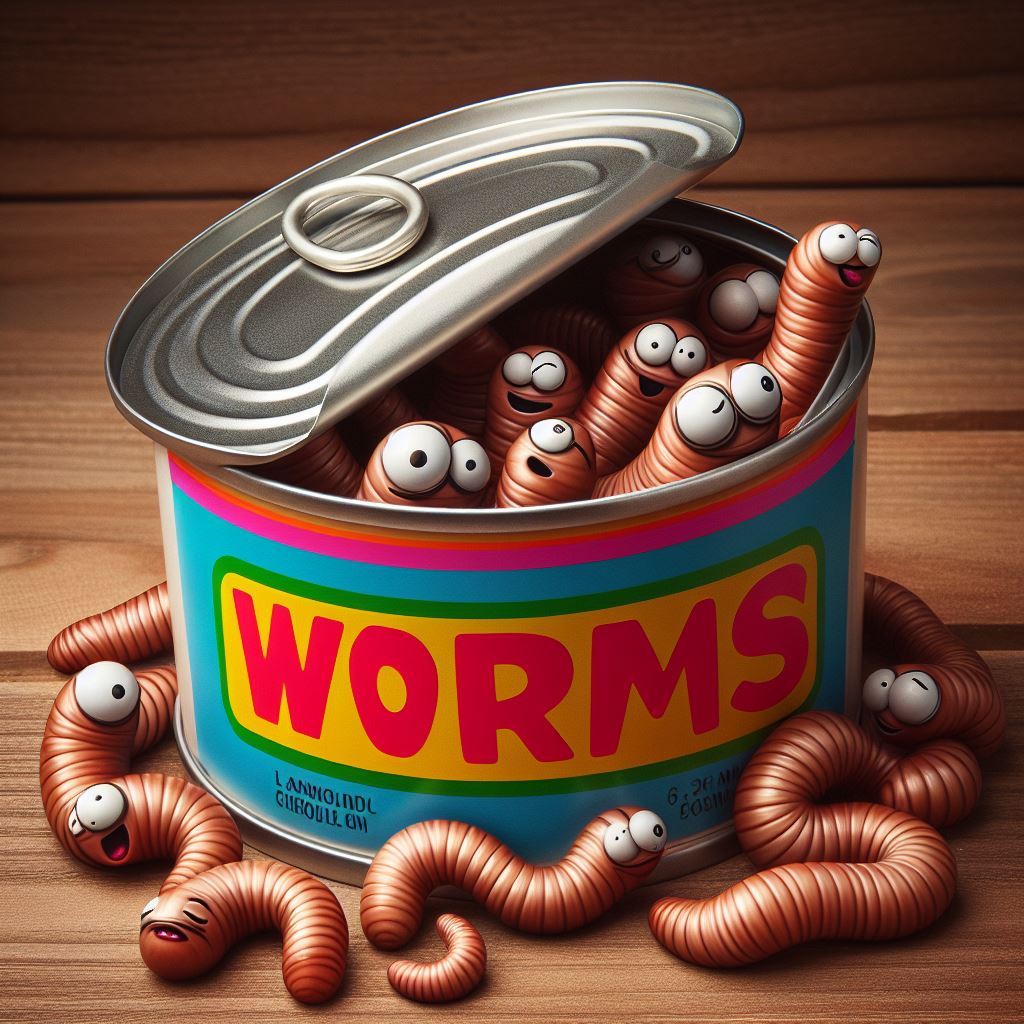
 Have you ever opened a can of worms? Years ago, before worms could be purchased in Styrofoam or plastic containers, metal bait cans were used that had handles. My container was plastic when I opened my can of worms.
I had taken my girls fishing and had opened the container, putting a worm on the hook for one child when the other child had a fish on the line and was starting to get excited. I hurriedly baited the hook and ran to where my other daughter was reeling in her fish. Once we landed the fish, I went back to my pole that I had left by the container of worms.
In the excitement, I had failed to put the lid back on the container and all the worms except two had managed to escape! One of the worms hollered, “Jailbreak!” and they started going over the wall.
This really surprised me. I hadn’t been gone but just a couple of minutes. How could those wiggly worms have gotten free so quickly? And where did they go? The ground was rock hard clay. You would have thought that, if nothing else, I would have found them on the grass. However, they had disappeared. And I learned my lesson.
“Metaphorically speaking, to open a can of worms is to examine or attempt to solve some problem, only to inadvertently complicate it and create even more trouble. Literally speaking, opening a can of worms, as most fishermen can attest, can also mean more trouble than you bargained for. No surprise, then, that the idiom was inspired by actual live worms.”1
Exodus 5:1-2 says, “And afterward Moses and Aaron went in, and told Pharaoh, Thus saith the LORD God of Israel, Let my people go, that they may hold a feast unto me in the wilderness. (2) And Pharaoh said, Who is the LORD, that I should obey his voice to let Israel go? I know not the LORD, neither will I let Israel go.” Pharaoh doesn’t know it but he just opened a can of worms!
Disobedience to God is dangerous. We know the story how God, through Moses, caused ten plagues to befall the Pharaoh and all of Egypt. Each plague seemed to get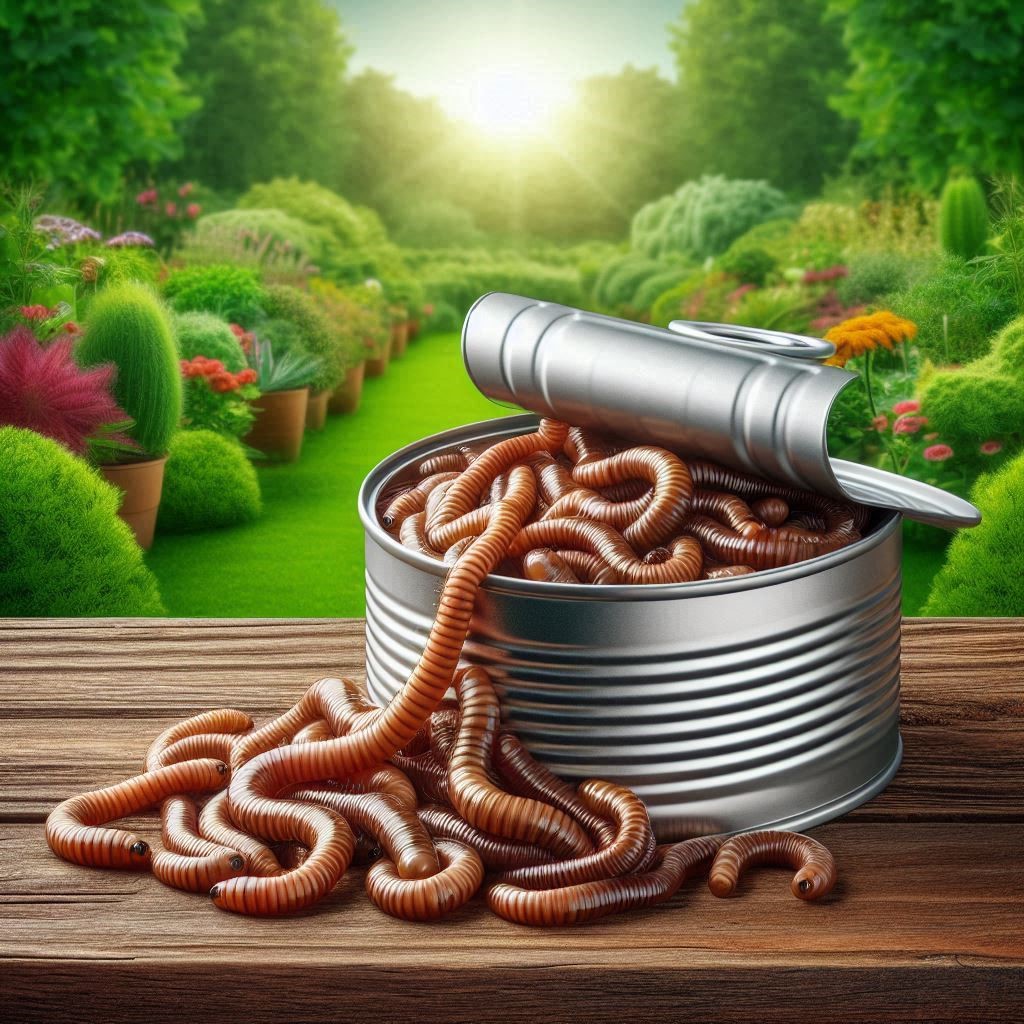 progressively worse than the last. The final plague was the death of the first born of man and beast.
The first plague is introduced in Exodus 7:14-17. “And the LORD said unto Moses, Pharaoh’s heart is hardened, he refuseth to let the people go. (15) Get thee unto Pharaoh in the morning; lo, he goeth out unto the water; and thou shalt stand by the river’s brink against he come; and the rod which was turned to a serpent shalt thou take in thine hand. (16) And thou shalt say unto him, The LORD God of the Hebrews hath sent me unto thee, saying, Let my people go, that they may serve me in the wilderness: and, behold, hitherto thou wouldest not hear. (17) Thus saith the LORD, In this thou shalt know that I am the LORD: behold, I will smite with the rod that is in mine hand upon the waters which are in the river, and they shall be turned to blood.”
The lid is off the can but could have been quickly put back on if Pharaoh hadn’t been so resistant and stubborn. Instead, Exodus 7:23 says, “And Pharaoh turned and went into his house, neither did he set his heart to this also.” He purposefully walked away with the lid off the can, not caring about himself or his people. The worms of God’s judgment are getting out!
 Even as Christians, we open a can of worms when we refuse to obey the Lord as we should. And, like those fishing worms I lost, we have no idea where the worms of our disobedience might go. Disobedience leads to chastening. The consequences of sin wiggle to affect not only ourselves but our loved ones, family, coworkers, and fellow church members.
Let’s put a lid on that can of worms today. Psalms 130:3-4 says, “If thou, LORD, shouldest mark iniquities, O Lord, who shall stand? (4) But there is forgiveness with thee, that thou mayest be feared.”
1https://www.mentalfloss.com/article/31039/how-did-term-open-can-worms-originate
Images are taken from https://pixabay.com/, https://www.pexels.com/, or https://unsplash.com/images or created in Windows Copilot. According to the websites, they are Royalty Free and free to be used for our purposes.
