
 Providers Association for Home Health & Hospice Agencies (PAHHHA) founded National Caregivers Day in 2015 to honor and recognize professional healthcare workers. This would include the staff of nursing home facilities, Hospice, Visiting Angels, and other similar organizations. This is an extremely dedicated group of workers who deserve recognition. However, for the purpose of today’s devotional, we are going to take the focus away from them and place it on the unpaid caregivers – the family members who are taking care of someone.
“The data suggest there are 44.58 million caregivers in the U.S. performing the equivalent of an estimated $873.5 billion worth of labor each year — or 3.2% of the U.S. gross domestic product (GDP).”1
As the population ages and the cost for elder care rises, many families are taking on the burden of providing that care themselves. Caregivers, though, are not just caring for the elderly. Some may be providing care for a terminally ill loved one. Others might care for those with dementia or Alzheimer’s. And there are some who are still caring for a disabled child.
While the use of the term “burden” may seem callous, we have to understand the added stress and strain the caregiver experiences. “If you’re a caregiver for someone you love, you’ve probably experienced your share of financial strain. Family caregivers spend close to $7,200 per year of their own money helping loved ones who are ill, aging, or living with disabilities. Some caregivers stop saving, take on more debt, have unpaid bills, or even leave their own jobs so they can take care of a family member or friend.”2
This doesn’t take into consideration the emotional and physical drain on the caregiver. Some family dynamics may include one needing care who makes a family feel guilty if they don’t personally provide that care. I took care of you when you were little. Now, it’s your turn to take care of me. If you don’t, you’re just proving that you never loved me. Such comments weigh on the caregiver, typically pushing them to achieve unrealistic expectations.
Regardless of why someone chooses to be the caregiver for another, this is a demanding responsibility. And caregivers need care themselves. How can we help them? First, let’s consider what they give. Four elements are true of every caregiver. They give mercy, compassion, selfless love, and time. James 3:17 says, “But the wisdom that is from above is first pure, then peaceable, gentle, and easy to be intreated, full of mercy and good fruits, without partiality, and without hypocrisy.” Caregiving is an exercise in this wisdom that is from above.
Now, back to the original question: how can we help them? It’s simple. They are giving mercy, compassion, selfless love, and time. We need to help refuel their depleted stores. 1 Peter 3:8 says, “Finally, be ye all of one mind, having compassion one of another, love as brethren, be pitiful, be courteous.” And 2 Corinthians 8:5 reminds us, “And this they did, not as we hoped, but first gave their own selves to the Lord, and unto us by the will of God.”
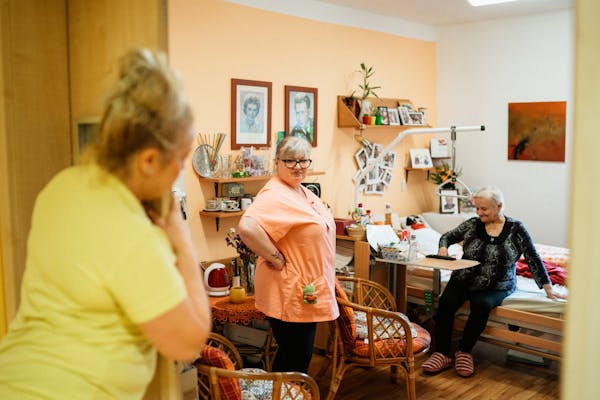 As we honor the caregiver, let’s determine to give care to the caregiver. They need cards of encouragement, too. They need to be reminded that they have not been forgotten. Apply 1 Thessalonians 1:2-3 to their situation. “We give thanks to God always for you all, making mention of you in our prayers; (3) Remembering without ceasing your work of faith, and labour of love, and patience of hope in our Lord Jesus Christ, in the sight of God and our Father.”
1https://www.bing.com/search?q=statistics+on+caregiving+in+America&filters=ex1%3a%22ez5_19758_20123%22&FORM=000017
2https://paid4care.aarpfoundation.org/get-paid/
Images are taken from https://pixabay.com/, https://www.pexels.com/, or https://unsplash.com/images or created in Windows Copilot. According to the websites, they are Royalty Free and free to be used for our purposes.
