

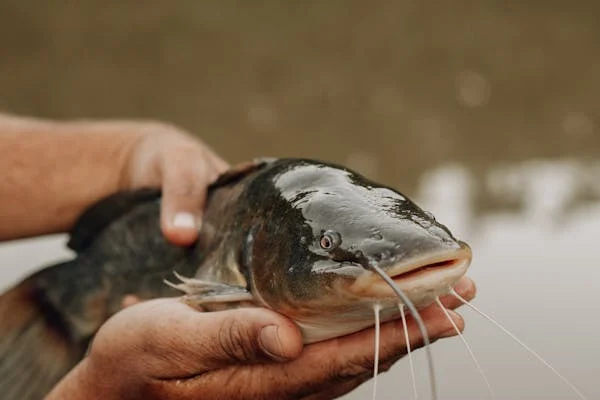
 If you enjoy fishing, today is National Catfish Day. Congress must not have had anything better to do in 1987, so they created Joint Resolution 178 which called for a day to recognize the catfish. Perhaps they were wishing they were fishing instead of legislating! President Ronald Reagan signed the proclamation, establishing June 25 as a day of celebration.
If you enjoy fishing, there’s nothing quite as exhilarating as casting your line into a pond and snagging a catfish. They will put up a great fight as you reel them in. And there’s nothing quite like a catfish fry. Just the thought makes my mouth water! Add some Cajun seasoning and you feel like you are in sync with the bayou.
The term “catfish” has taken on an additional meaning these days. It still involves a hook and lure of sorts but it’s not the catfish who gets eaten. Instead, the catfish does the eating.
“Catfishing, sometimes called catphishing, is a type of scam that involves deceiving someone online by using a fake identity to build a misleading relationship. It is a potentially serious cybercrime that can leave victims with emotional trauma as well as financial loss…
“To be catfished means that someone has attempted to trick you into believing you’re interacting with a real person online, when it’s actually a scammer using a fake or stolen identity. Unlike spoofing, where scammers fake a website or phone number, catfishing involves creating an entire persona.
“While catfishing is often associated with romance scams, children and teenagers are also targeted on non-dating platforms…
“Catfishing generally happens in three steps:
- Bait: The catfish invents a persona, using stolen photos, names, and personal details, sometimes fabricating an entire life story.
- Hook: They flatter you, mirror your interests, and nurture a sense of connection, so you feel comfortable and invested.
- Reel: Once they’ve established trust, they start asking for favors, financial support, sensitive information, or explicit content.
“…Catfishing can escalate into serious crimes or dangerous situations. For example, in 2022, a man named Austin Lee Edwards allegedly catfished a 15-year-old girl, which tragically led to a triple homicide. This case serves as a reminder of how serious online deception can become, and why staying cautious is so important…
“Catfishers often target younger females and older males. But anyone online can be targeted…To help protect yourself from catfishing, be cautious in online chats, verify identities, and ask specific questions…”1
What an evil cyber world we live in!
Where do people learn such wickedness? It should come as no surprise that Satan is the original catfisher! 2 Corinthians 11:14-15 says, “And no marvel; for Satan himself is transformed into an angel of light. (15) Therefore it is no great thing if his ministers also be transformed as the ministers of righteousness; whose end shall be according to their works.” Satan poses as this angel of light, making a person think that what he says and does is good. He pulled this on Eve in the Garden and has been pulling his scams ever since.
What do we do to avoid Satanic catfishing? 1 John 4:1 says, “Beloved, believe not every spirit, but try the spirits whether they are of God: because many false prophets are gone out into the world.” 1 Thessalonians 5:21 admonishes us to “Prove all things; hold fast that which is good.”
 In the cyberworld, people can be catfished so easily. In the spiritual world, this ought not to be the case. We have been given ample warnings, we have the indwelling Holy Spirit, and we have the truth of the Word of God to help us discern truth from error.
Let’s take Ephesians 5:6-7, 10 to heart, as well as many other verses in the Bible to keep us from falling for the devil’s deceptions.
“Let no man deceive you with vain words: for because of these things cometh the wrath of God upon the children of disobedience. (7) Be not ye therefore partakers with them…(10) Proving what is acceptable unto the Lord.”
1https://us.norton.com/blog/online-scams/what-is-catfishing
Images are taken from https://pixabay.com/, https://www.pexels.com/, or https://unsplash.com/images or created in Windows Copilot. According to the websites, they are Royalty Free and free to be used for our purposes.
