

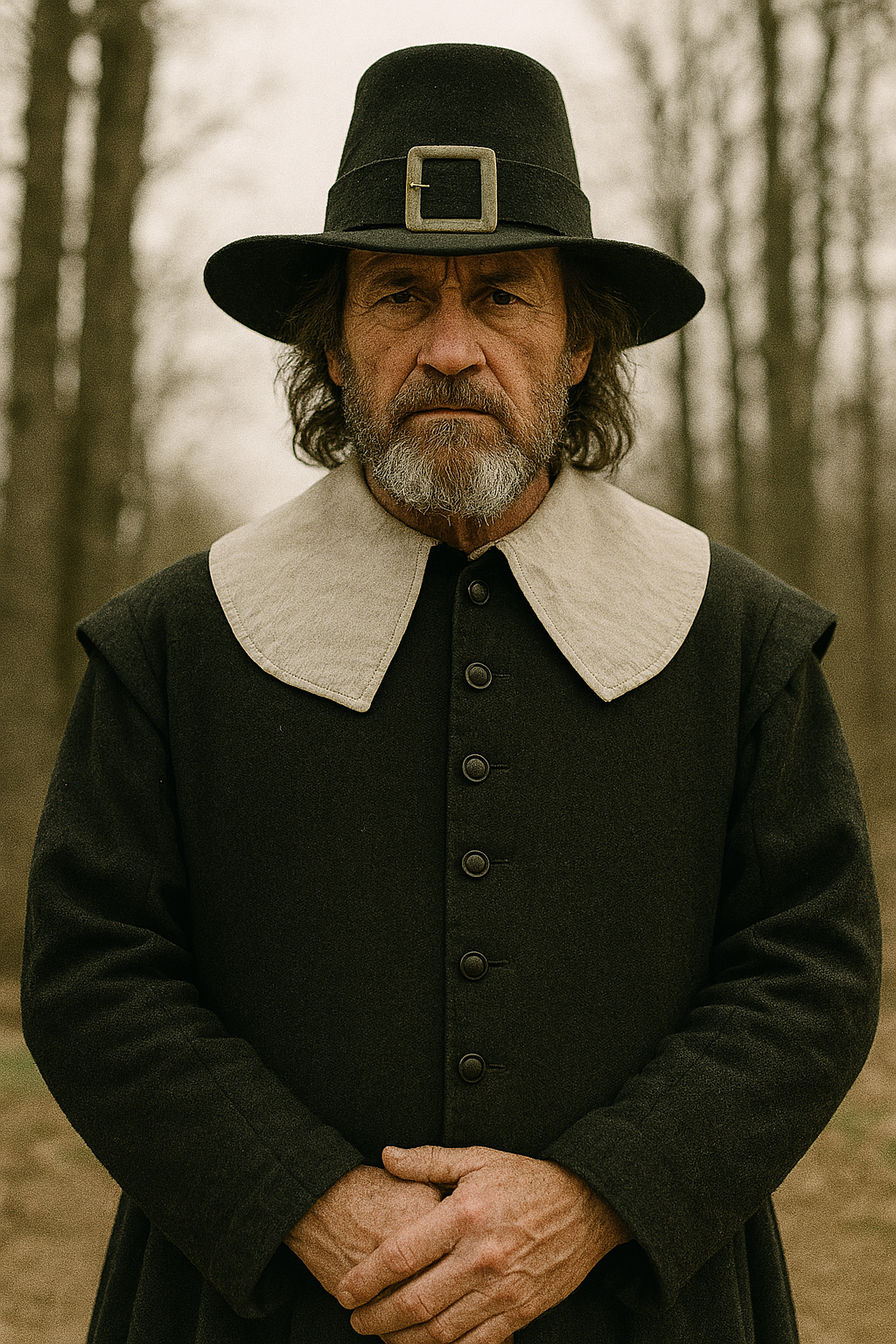
 On October 27, 1659, William Robinson and Marmaduke Stevenson were executed by hanging in the Boston, Massachusetts colony. Their crime?
They were Quakers.
“The Quakers, or the Religious Society of Friends, began when people within the Church of England saw corruption and false doctrine rise in that body in the 1650s. With Puritanism also came a type of Phariseeism driven by personal pride and doctrinal divisiveness. A non-conformist movement was started by those who sought to distance themselves from Puritanism…
“The Quakers viewed the traditional Christian as “conceited of himself, and strong in his own will and righteousness, overcome with blind zeal and passion.” George Fox, the founder of Quakerism, said the name “Quaker” was first used as a derogatory term in court, “because we bid them tremble at the Word of God.” Quakers were persecuted widely in England and the American Colonies and were often imprisoned or put to death for their beliefs. Because of this widespread persecution, William Penn founded the Pennsylvania Colony to provide a safe haven for Quakers.
“The practical emphases of Quaker doctrine have always been 1) reliance on the direct guidance of the Holy Spirit, 2) love for one another, 3) love for enemies (pacifism), and 4) the sufficiency of truth-speaking (not taking any oaths)…
“One of the distinctives of Quakerism is the practice of “group spiritual discernment,” whereby the Friends wait on God to lead them in whatever business is at hand. This sensitivity to the Spirit’s moving is indeed valuable and often lacking in other churches. On the other hand, if the people in the group have not sufficiently studied the Scriptures for God’s revealed will, the group may “feel led” to something that violates Scripture. This is why the apostle John commanded us to “believe not every spirit, but try the spirits whether they are of God” (1 John 4:1). Historically, the Quakers have always tried to emphasize the social aspects of the gospel. They were involved in ending slavery and increasing the rights of women and minorities…”1
A careful study of Quaker doctrine would put us at odds with some of their teachings. The thing that strikes me from history is that we’ve always believed those coming to this New World came with a desire for religious freedom. Evidently, what many meant by religious freedom was “religious freedom so long as you believe what I believe.” Many of the Puritans seem to be no better than the religious persecutors they left in England.
I will be the first to defend doctrinal purity. I will stand for the truth of the Word of God and defend the Scriptures. But I will not inflict my beliefs on someone, forcing them to believe or admit belief. If within my power, I would not threaten someone with imprisonment or death if they do not belief.
Belief and acceptance of God’s words is a choice. This is demonstrated by Israel in Psalms 78:31-32. “The wrath of God came upon them, and slew the fattest of them, and smote down the chosen men of Israel. (32) For all this they sinned still, and believed not for his wondrous works.” Notice that it is the wrath of GOD, not man. Man has the choice to believe or not believe. Those who refuse to believe will experience God’s wrath.
John 12:37 says, “But though he had done so many miracles before them, yet they believed not on him.” This was their right and their choice. Believers had no right, though, to enact persecution for their unbelief.
Even today, we need to be very careful that we don’t wield our beliefs like a sword. Our world is filled with people whose beliefs are all across the spectrum. We cannot bully or force anyone to see the light and accept the truth. We need to kindly speak the “truth in love” with grace words that are “seasoned with salt.” We can never back down or temper the truth. But we cannot force someone to believe as we do. That is the work of the Holy Spirit.
I close today’s thoughts with Scripture that highlights the Spirit’s responsibility to bring the light of the Word of God to our world. John 16:7-15 says, “Nevertheless I tell you the truth; It is expedient for you that I go away: for if I go not away, the Comforter will not come unto you; but if I depart, I will send him unto you. (8) And when he is come, he will reprove the world of sin, and of righteousness, and of judgment: (9) Of sin, because they believe not on me; (10) Of righteousness, because I go to my Father, and ye see me no more; (11) Of judgment, because the prince of this world is judged. (12) I have yet many things to say unto you, but ye cannot bear them now. (13) Howbeit when he, the Spirit of truth, is come, he will guide you into all truth: for he shall not speak of himself; but whatsoever he shall hear, that shall he speak: and he will shew you things to come. (14) He shall glorify me: for he shall receive of mine, and shall shew it unto you. (15) All things that the Father hath are mine: therefore said I, that he shall take of mine, and shall shew it unto you.”
1https://www.gotquestions.org/Quakers-Friends.html
Images are taken from https://pixabay.com/, https://www.pexels.com/, or https://unsplash.com/images or created in Windows Copilot. According to the websites, they are Royalty Free and free to be used for our purposes.
