

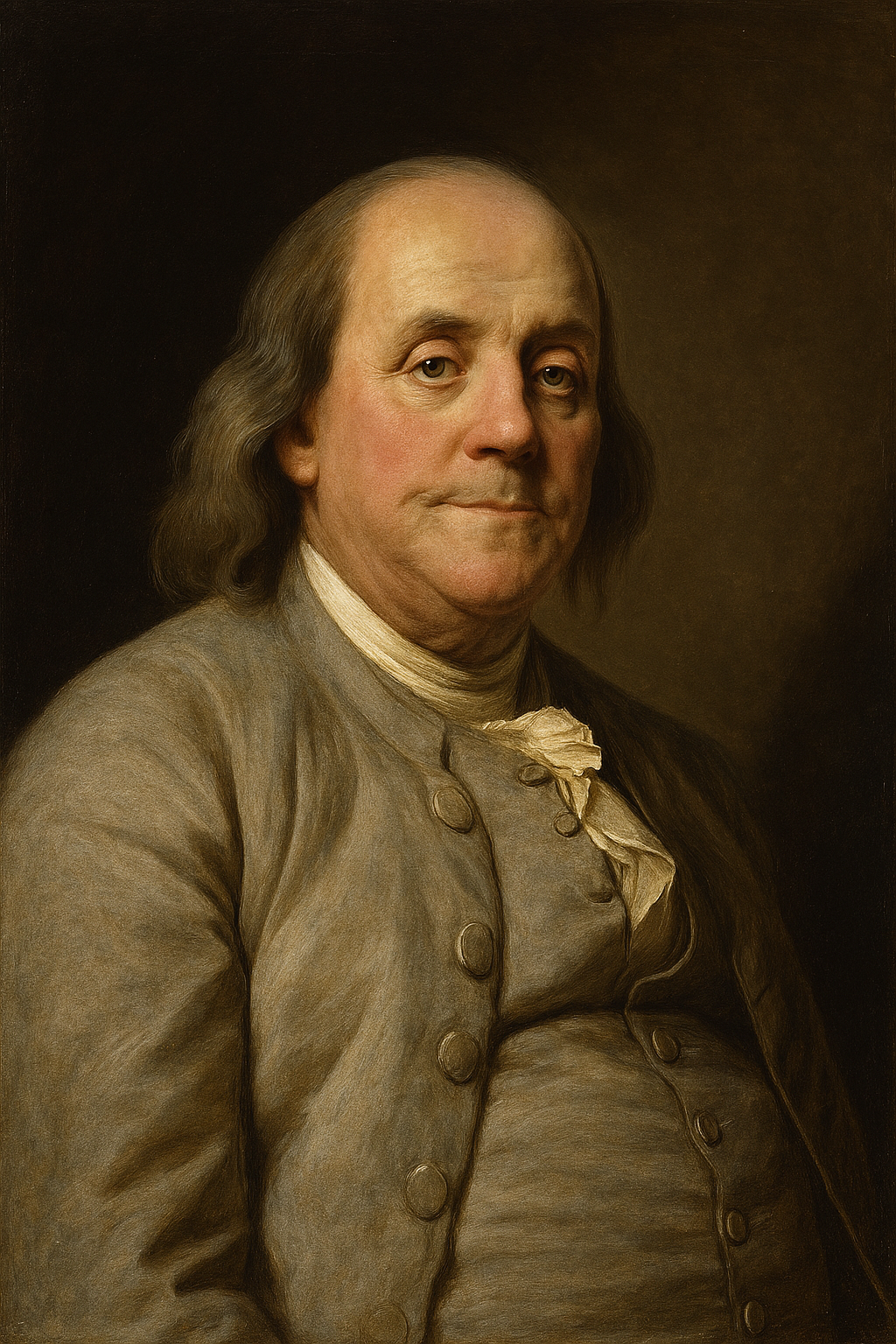
 The Committee of Five were given a difficult task. They had to devise a document that would collectively represent the disagreements, declarations, and direction of approximately 2.5 million people. Could such a document convey these points with eloquence as well as conviction? How would the document be received? Once it was written and delivered, would it still have the support of the 2.5 million or would there be defectors?
Such was the responsibility conveyed on this day in 1776 by the Continental Congress to Thomas Jefferson of Virginia, John Adams of Massachusetts, Benjamin Franklin of Pennsylvania, Roger Sherman of Connecticut and Robert R. Livingston of New York. It was their job to draft the Declaration of Independence.
After meeting with the committee and hashing out the essential content of the document, the first draft was authored by Thomas Jefferson at the urging of John Adams. Once it was written, it was carefully revised by Adams and Franklin. The final copy was presented to Congress on June 28th.1
“When, in the Course of human Events, it becomes necessary for one People to dissolve the Political Bands which have connected them with another, and to assume, among the Powers of the Earth, the separate and equal Station to which the Laws of Nature and of Nature’s God entitle them, a decent Respect to the Opinions of Mankind requires that they should declare the Causes which impel them to the Separation.
“We hold these Truths to be self-evident that all Men are created equal, that they are endowed, by their Creator, with certain unalienable Rights, that among these are Life, Liberty, and the Pursuit of Happiness.”
For 250 years, these opening words have echoed the convictions of our nation’s forefathers. As the saying goes, “them be fightin’ words,” though fighting had already been going on since April 19, 1775. Now, over a year into the Revolutionary War, the Committee of Five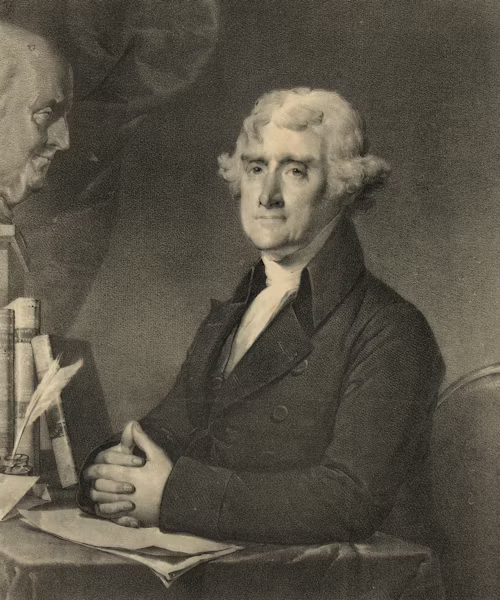 and the Continental Congress did not have much hope that this declaration would end the war. It was simply time to declare that the colonies considered themselves independent of England, renouncing their allegiance to the king, and the formation of a new nation.
Why now? What prompted this declaration? “By the spring of 1776 when the Second Continental Congress reconvened in Philadelphia, the Patriots were winning the hearts and minds of many Neutrals. More people were demanding a formal and complete break with the Mother Country and there were several calls for independence across the thirteen colonies.”2 The Declaration served as a battle cry that comes right out of the Scriptures.
Joshua 24:14-16 says, “Now therefore fear the LORD, and serve him in sincerity and in truth: and put away the gods which your fathers served on the other side of the flood, and in Egypt; and serve ye the LORD. (15) And if it seem evil unto you to serve the LORD, 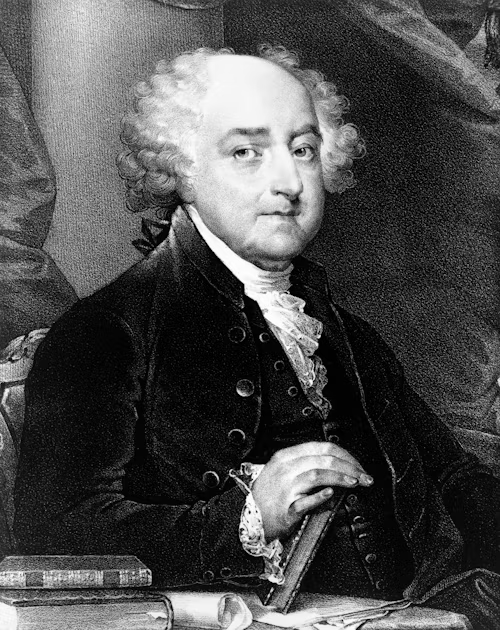 choose you this day whom ye will serve; whether the gods which your fathers served that were on the other side of the flood, or the gods of the Amorites, in whose land ye dwell: but as for me and my house, we will serve the LORD. (16) And the people answered and said, God forbid that we should forsake the LORD, to serve other gods.” The people made a right decision, though they would frequently falter and fail.
This statement stands in contrast to another time of decision needing to be made. As Elijah prepared to stand against the prophets of Baal, quite a scene develops. In the midst of the showdown, we read 1 Kings 18:20-21. “So Ahab sent unto all the children of Israel, and gathered the prophets together unto mount Carmel. (21) And Elijah came unto all the people, and said, How long halt ye between two opinions? if the LORD be God, follow him: but if Baal, then follow him. And the people answered him not a word.”
They couldn’t decide if the LORD was God?!? This gives all new meaning to “neutrality” and “fence riding.”
Today, Christian, is a great day to challenge us to get off the fence. It’s time to take our stand for the Lord, making our declaration public, and being willing to suffer whatever might come our way from the stand we take.
May we be able to say with David, “I have chosen the way of truth: thy judgments have I laid before me.” (Psalms 119:30)
1https://www.history.com/this-day-in-history/june-11/congress-appoints-committee-of-five-to-draft-the-declaration-of-independence
2https://www.jyfmuseums.org/learn/research-and-collections/essays/what-factors-finally-pushed-the-second-continental-congress-to-declare-independence-in-july-1776
Images are taken from https://pixabay.com/, https://www.pexels.com/, or https://unsplash.com/images or created in Windows Copilot. According to the websites, they are Royalty Free and free to be used for our purposes.
