

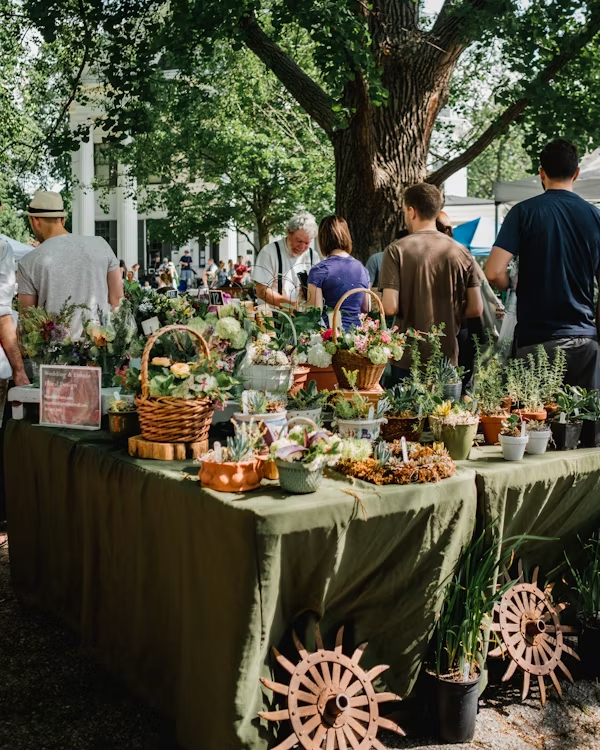
 Driving into our small, rural communities provides something that “city folk” never see: a Farmer’s Market. Fruit and vegetable stands line the sidewalk while many vendors, clad in bib overalls and straw hats sell the bounty of their gardens to the shoppers. Many of the vendors have taken to also selling products from their own kitchens, whether that be jams and jellies, soaps, breads, and even candles. The atmosphere is exactly what you would expect. It all exudes the feel of a time long passed when life was simpler, people were friendlier, there were Sunday family dinners, and a night sitting on the front porch with family was a common thing.
While you reminisce, let me introduce today’s National Day Calendar event. This is National Eat Your Vegetables Day. I know that some of you don’t like veggies. My mother was that way and wouldn’t eat them for anything. However, eating your veggies is a good and healthy practice.
“Each vegetable has its own nutritional content. Generally, they contain a little protein or fat and varying proportions of vitamins such as Vitamin A, Vitamin K and Vitamin B6, provitamins, dietary minerals, and carbohydrates. Interestingly, they also contain a variety of other phytochemicals, some of which have antioxidant, antibacterial, antifungal, antiviral and anticarcinogenic properties. In addition, many vegetables also contain fiber, which is important for gastrointestinal function. Another benefit is the essential nutrients that vegetables contain that are necessary for healthy hair and skin.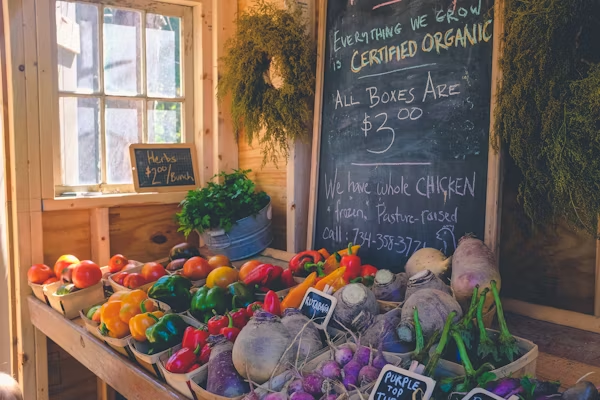
“When eating a diet consisting of the recommended amounts of fruits and vegetables, it may help lower the risk of heart diseases and type 2 diabetes. These diets may also help to decrease bone loss and protect against some cancers. In addition, the potassium provided may help prevent the formation of kidney stones.”1
In one case, eating your vegetables was a good testimony.
“But Daniel purposed in his heart that he would not defile himself with the portion of the king’s meat, nor with the wine which he drank: therefore he requested of the prince of the eunuchs that he might not defile himself. (9) Now God had brought Daniel into favour and tender love with the prince of the eunuchs. (10) And the prince of the eunuchs said unto Daniel, I fear my lord the king, who hath appointed your meat and your drink: for why should he see your faces worse liking than the children which are of your sort? then shall ye make me endanger my head to the king. (11) Then said Daniel to Melzar, whom the prince of the eunuchs had set over Daniel, Hananiah, Mishael, and Azariah, (12) Prove thy servants, I beseech thee, ten days; and let them give us pulse to eat, and water to drink. (13) Then let our countenances be looked upon before thee, and the countenance of the children that eat of the portion of the king’s meat: and as thou seest, deal with thy servants.” (Daniel 1:8-13)
What in the world is pulse? The Hebrew word simply means vegetables. The Ultimate Cross Reference Treasury says, “Pulse, zeroim (Hebrew), denotes all leguminous plants, which are not reaped, but pulled or plucked; which, however wholesome, was not naturally calculated to render them fatter in flesh than the others.” Though this is typically the result of vegetables, the Lord divinely worked in the bodies of the four young men and through those veggies.
“And at the end of ten days their countenances appeared fairer and fatter in flesh than all the children which did eat the portion of the king’s meat.” (Daniel 1:15) We shouldn’t be surprised. Just look at a rabbit! In the wild, they get chubby off of hay, fruits, 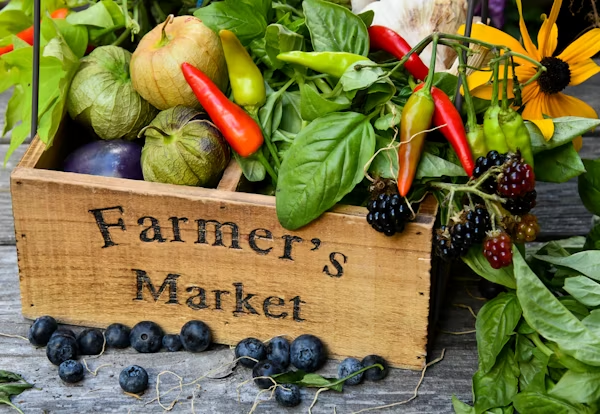 vegetables, and water. And these are the foods we turn to when we are trying to LOSE weight!
Daniel and his friends took their stand for the Lord, ate their veggies, and God blessed. Even something as simple as what you ingest can be a witness for the Lord.
Today, as you nibble on a carrot, munch on a salad, or visit a Farmer’s Market, think back to this story in Daniel and rejoice in Proverbs 10:22. “The blessing of the LORD, it maketh rich, and he addeth no sorrow with it.”
1https://www.nationaldaycalendar.com/national-day/national-eat-your-vegetables-day-june-17
Images are taken from https://pixabay.com/, https://www.pexels.com/, or https://unsplash.com/images or created in Windows Copilot. According to the websites, they are Royalty Free and free to be used for our purposes.
