
 Four score and seven years ago our fathers brought forth, on this continent, a new nation, conceived in Liberty, and dedicated to the proposition that all men are created equal.
Now we are engaged in a great civil war, testing whether that nation, or any nation so conceived and so dedicated, can long endure. We are met on a great battle-field of that war. We have come to dedicate a portion of that field, as a final resting place for those who here gave their lives that that nation might live. It is altogether fitting and proper that we should do this.
But, in a larger sense, we can not dedicate—we can not consecrate—we can not hallow—this ground. The brave men, living and dead, who struggled here, have consecrated it, far above our poor power to add or detract. The world will little note, nor long remember what we say here, but it can never forget what they did here. It is for us the living, rather, to be dedicated here to the unfinished work which they who fought here have thus far so nobly advanced. It is rather for us to be here dedicated to the great task remaining before us—that from these honored dead we take increased devotion to that cause for which they gave the last full measure of devotion—that we here highly resolve that these dead shall not have died in vain—that this nation, under God, shall have a new birth of freedom—and that government of the people, by the people, for the people, shall not perish from the earth.
Abraham Lincoln
November 19, 1863.1
It was 161 years ago on this day that President Lincoln delivered this speech. The battle waged on this ground lasted from July 1 to July 3, 1863. “Nearly one-third of the total forces engaged at Gettysburg became casualties. George Gordon Meade’s Army of the Potomac lost 28 percent of the men involved; Robert E. Lee’s Army of Northern Virginia suffered over 37 percent. Of these casualties, 7,058 were fatalities (3,155 Union, 3,903 Confederate). Another 33,264 had been wounded (14,529 Union, 18,735 Confederate) and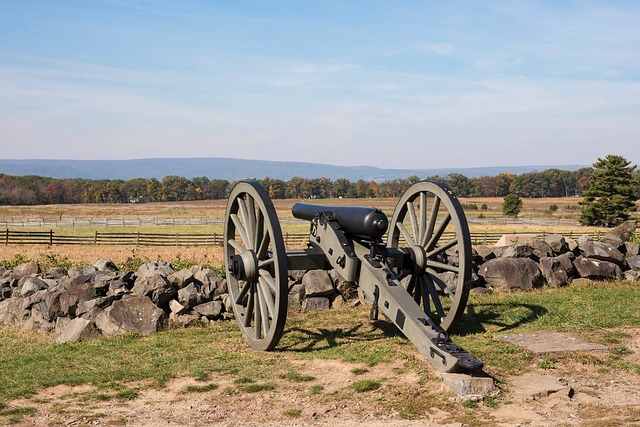 10,790 were missing (5,365 Union, 5,425 Confederate).”2
Prior to his speaking, famous orator and former president of Harvard College, former U.S. senator and former secretary of state, Edward Everett, spoke eloquently for two hours. Following the speech, the orchestra played a hymn, then President Lincoln took the platform. His message lasted less than two minutes and contained only 271 words. But those are the words that have gone down in history books as some of the most significant and powerful ever spoken.
Later, Everett wrote to Lincoln, ““I wish that I could flatter myself that I had come as near to the central idea of the occasion in two hours as you did in two minutes.”3
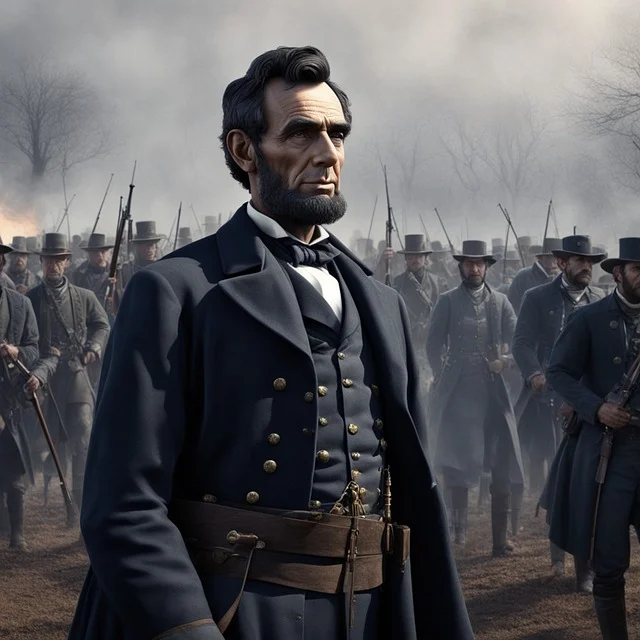
Much has been said through the years about Lincoln’s speech. As he stood before the crowd, he was a man agonizing over the deaths of these young men and the decisions he had made that led to war. His features had aged significantly since taking office as the stress wore him down. Still, his spirit was resolute.
Many devotional points can be drawn from The Gettysburg Address, but I will concede to sharing only one: actions speak louder than words. Again, Lincoln said, “The world will little note, nor long remember what we say here, but it can never forget what they did here.” As we toured the area a few years back, Lincoln’s words never crossed my mind. Instead, the solemnity of the moment and the thought of what happened there caused you to speak in quiet tones as you absorbed the scene.
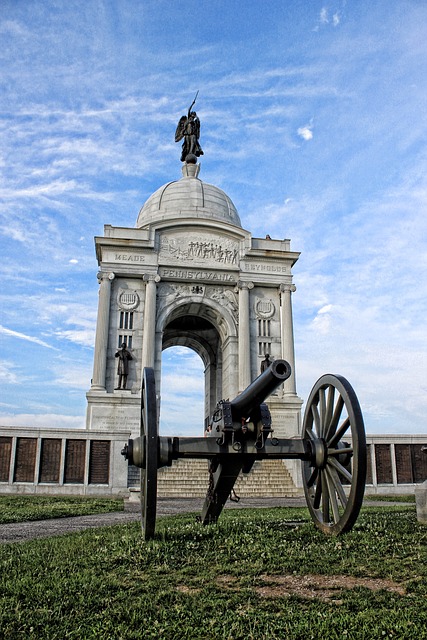 1 John 3:18 says, “My little children, let us not love in word, neither in tongue; but in deed and in truth.” The context of the passage doesn’t apply to war. Rather, it applies to reaching out to brothers and sisters in Christ in their time of crisis. However, a legitimate application can be made to those who bleed and die on battlefields like Gettysburg. Their actions speak louder than their words.
Many can talk about their love of country but very few have fought to protect her and even fewer have died. Only 6% of Americans are veterans (see devotional for 11/11). That equals about 20.2 million people in a population of 337.3 million. It’s hard to talk about millions of anything without thinking it’s a lot but it’s really not. The number gets worse: less than 1.3 million are active military. That means only 0.3% are protecting 99.7% of us.
That’s putting your money where your mouth is and letting your actions speak louder than your words!
Even though we had Veterans Day a few days ago, we still cannot say thank you enough. Thank you for demonstrating your love for country. May your service and Lincoln’s speech help to motivate Christians to put their love for God into action.
Galatians 5:13 reminds us, “For, brethren, ye have been called unto liberty; only use not liberty for an occasion to the flesh, but by love serve one another.”
1https://www.owleyes.org/text/gettysburg-address/read/text-of-lincolns-speech#root-6
2https://www.historynet.com/gettysburg-casualties/
3https://www.history.com/topics/american-civil-war/gettysburg-address
Images are taken from https://pixabay.com/, https://www.pexels.com/, or https://unsplash.com/images or created in Windows Copilot. According to the websites, they are Royalty Free and free to be used for our purposes.
