
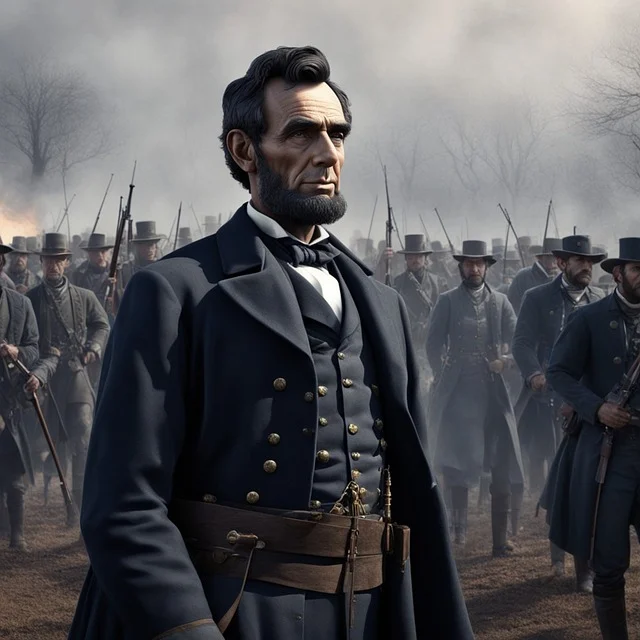
 On this day in 1863, 271 powerful words would be spoken that have transcended the past 162 years. They are still memorized and recited today with the honor and gravitas from years ago.
Four score and seven years ago our fathers brought forth, on this continent, a new nation, conceived in Liberty, and dedicated to the proposition that all men are created equal.
Now we are engaged in a great civil war, testing whether that nation, or any nation so conceived and so dedicated, can long endure. We are met on a great battle-field of that war. We have come to dedicate a portion of that field, as a final resting place for those who here gave their lives that that nation might live. It is altogether fitting and proper that we should do this.
But, in a larger sense, we can not dedicate—we can not consecrate—we can not hallow—this ground. The brave men, living and dead, who struggled here, have consecrated it, far above our poor power to add or detract. The world will little note, nor long remember what we say here, but it can never forget what they did here. It is for us the living, rather, to be dedicated here to the unfinished work which they who fought here have thus far so nobly advanced. It is rather for us to be here dedicated to the great task remaining before us—that from these honored dead we take increased devotion to that cause for which they gave the last full measure of devotion—that we here highly resolve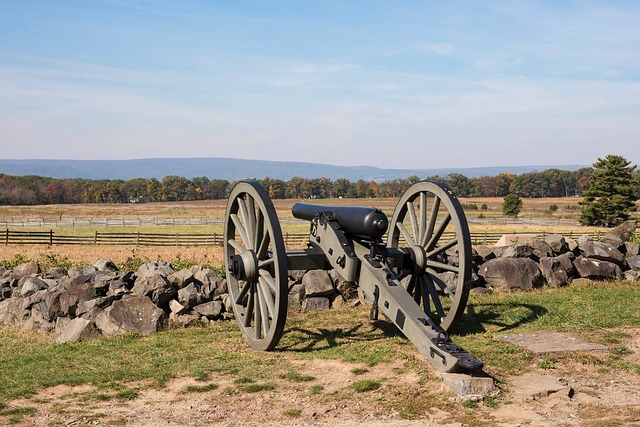 that these dead shall not have died in vain—that this nation, under God, shall have a new birth of freedom—and that government of the people, by the people, for the people, shall not perish from the earth. Abraham Lincoln
“Edward Everett, a popular orator in those days, was to be the “headliner” that day. The event organizer, David Wills, invited Lincoln to follow Everett’s speech and to share a few remarks to honor and memorialize the Union dead…
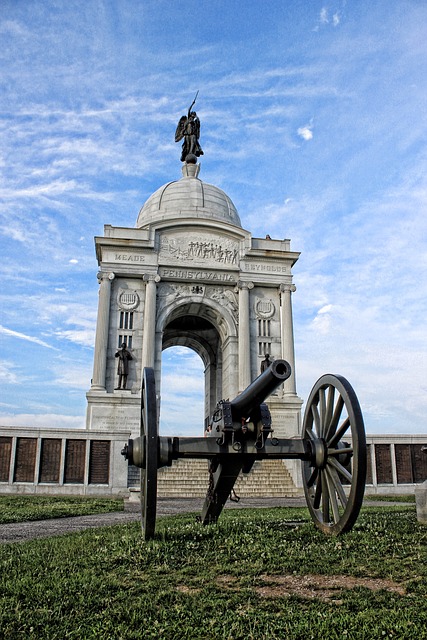
“When President Lincoln delivered his address, he did not stand on the impressive rostrum or at the statue that can be seen on site today. Instead, there is a “natural” monument of sorts in the spot where our 16th president stood to give the Gettysburg Address.”1
Everett spoke for 2 hours. President Lincoln spoke less than two minutes. And Mr. Lincoln got something wrong. He said, “The world will little note, nor long remember what we say here, but it can never forget what they did here.” Just the opposite is true, at least, for me. I knew the Gettysburg Address. I knew very little about the place and essentially nothing about what happened there. I know nothing about what Everett said but I know the words of President Lincoln.
A few years back, we took a trip to Gettysburg. We had a wonderful tour guide who spoke with what sounded like first-hand knowledge. We visited the place where President Lincoln delivered the address. We saw the fields where the battle took place and had it explained how those who were first to cross from one field to the next were immediately killed. Knowing they would inevitably die, they charged ahead, realizing a good greater than their own lives existed.
Many applications can be made from what Lincoln said that day but let me focus on one: our words. Ecclesiastes 5:2 says, “Be not rash with thy mouth, and let not thine heart be hasty to utter any thing before God: for God is in heaven, and thou upon earth: therefore let thy words be few.” Proverbs warns that there is danger in a multitude of words. Lincoln said more in 2 minutes than Everett said in 2 hours!
 As Christians, we need to examine not only what we say but how we say it. Words must be chosen slowly and carefully. The full brunt of how those words could be received needs to be considered. Our tone and attitude must be weighed carefully before we deliver those words.
Are my words truth? Are they full of love? Are they given with grace and seasoned with salt? Are they necessary? Are they edifying? Are they unifying? Are they helpful? So many questions should be asked in our hearts before we open our mouths.
Mr. Lincoln taught us well and showed us how gracious truth can be spoken, even on a battlefield where nearly 11,000 lives were lost. May we desire to do the same.
“A word fitly spoken is like apples of gold in pictures of silver.” (Proverbs 25:11)
1https://www.gettysburgbattlefieldtours.com/where-was-the-gettysburg-address-given/
Images are taken from https://pixabay.com/, https://www.pexels.com/, or https://unsplash.com/images or created in Windows Copilot. According to the websites, they are Royalty Free and free to be used for our purposes.
