
 When cultures meet – or collide – someone needs to be there to bridge the gap. These individuals are known as interpreters and yesterday was National Interpreters’ Day. The day was created in 2013 to recognize those individuals who work in government, schools, hospitals, and a variety of other places, helping people communicate and understand each other who speak different languages.
There are over 6,500 languages in our world. This doesn’t include the multitude of dialects specific to certain regions. Even if they are speaking “English,” an interpreter might be needed.
If you’ve ever watched the show Swamp People, it takes you to Louisianna and the Bijou where Cajun English is used. The people featured on the show are mostly hunting alligators, but they have drifted into segments where cooking is done, creating dishes of boudin, nutria (swamp rat), Cochon de Lait, or boiled crawfish. My Instagram feed has had numerous reels on how to eat crawfish which isn’t for the weak of stomach! All the while, you’re trying to figure out what they are saying because the Louisianna dialect is hard for me to understand.
My wife has really gotten into British television. In America, we are allegedly the recipients of the King’s English but they say a lot of things I simply cannot understand. We will watch a program with Closed Captioning turned on, hoping to understand them. Even then, there are times where even the CC can’t figure out what they are saying and will substitute something completely unrelated.
This confusion of languages started back in Genesis 11:1-9. “And the whole earth was of one language, and of one speech. (2) And it came to pass, as they journeyed from the east, that they found a plain in the land of Shinar; and they dwelt there. (3) And they said one to another, Go to, let us make brick, and burn them throughly. And they had brick for stone, and slime had they for morter. (4) And they said, Go to, let us build us a city and a tower, whose top may reach unto heaven; and let us make us a name, lest we be scattered abroad upon the face of the whole earth. (5) And the LORD came down to see the city and the tower, which the children of men builded. (6) And the LORD said, Behold, the people is one, and they have all one language; and this they begin to do: and now nothing will be restrained from them, which they have imagined to do. (7) Go to, let us go down, and there confound their language, that they may not understand one another’s speech. (8) So the LORD scattered them abroad from thence upon the face of all the earth: and they left off to build the city. (9) Therefore is the name of it called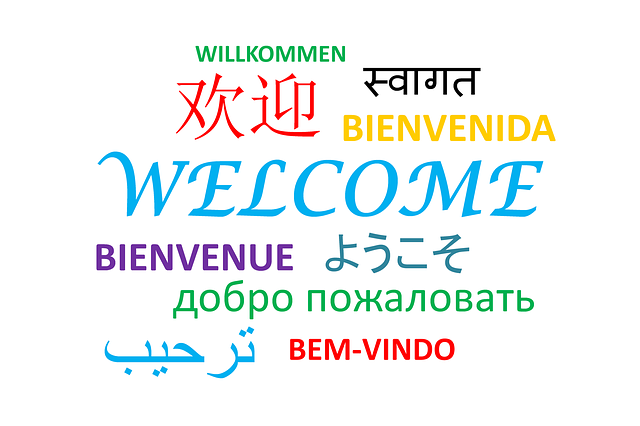 Babel; because the LORD did there confound the language of all the earth: and from thence did the LORD scatter them abroad upon the face of all the earth.”
This post-Flood, rebellious group of people didn’t want to scatter and fill the earth as the Lord directed. They wanted to do their own thing and make a name for themselves. This rebellion met with God’s resistance and diverse languages resulted. No interpreters could have come to the rescue because this is all new. Look again in verse one: the whole earth was of ONE language and of ONE speech.
Today, linguists have had time to study languages. Gifted individuals are able to learn other languages. Our missionaries must learn the language of the nation where they serve in order to be effective. This takes a lot of time and effort on their part.
In spite of all the languages in our world, there is coming a day when they will speak as one voice once again, saying the same thing. That day is rapidly approaching! Christians, let’s 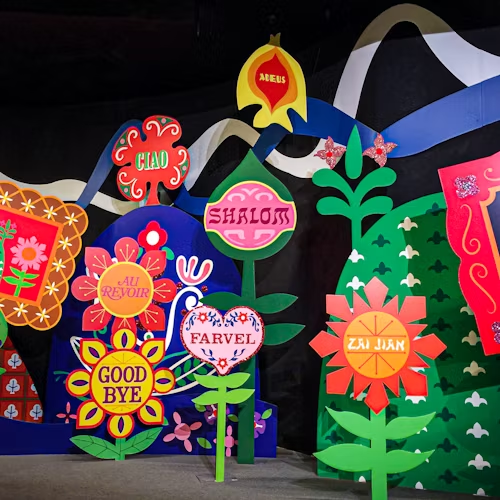 practice lifting our voices today, doing what Philippians 2:9-11 predicts for the future. “Wherefore God also hath highly exalted him, and given him a name which is above every name: (10) That at the name of Jesus every knee should bow, of things in heaven, and things in earth, and things under the earth; (11) And that every tongue should confess that Jesus Christ is Lord, to the glory of God the Father.”
Images are taken from https://pixabay.com/, https://www.pexels.com/, or https://unsplash.com/images or created in Windows Copilot. According to the websites, they are Royalty Free and free to be used for our purposes.
