
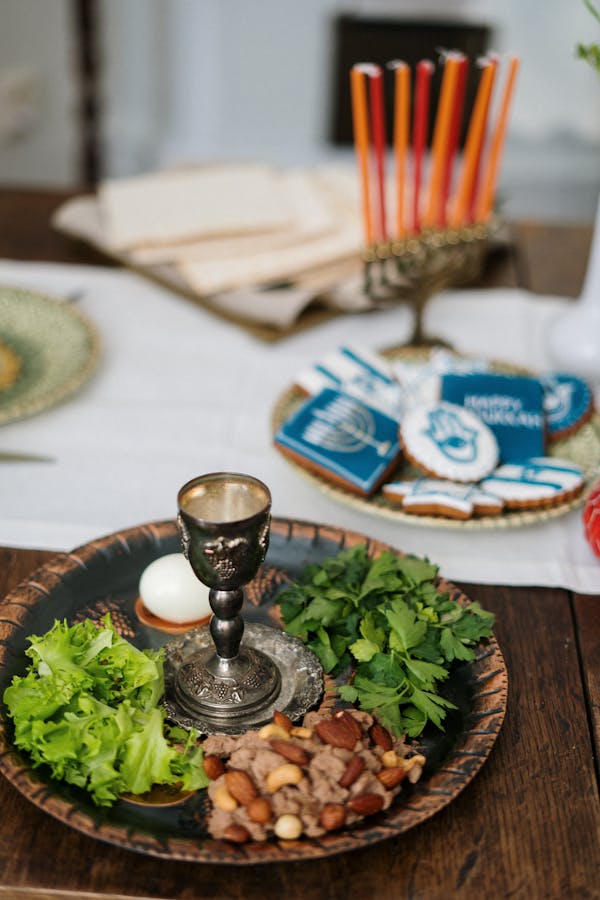
 On the Jewish calendar, today is Nisan 15, 5784. The year “is the amount of years which have elapsed since creation.”1 And, according to that calendar, today is the first day of Pesach or Passover. This week long observance becomes the Feast of Unleavened Bread. It is used to commemorate the Lord’s deliverance in Egypt, particularly from the final plague.
The criteria for this celebration is stipulated in Exodus 12:2-20. Some of those verses say, “This month shall be unto you the beginning of months: it shall be the first month of the year to you. (3) Speak ye unto all the congregation of Israel, saying, In the tenth day of this month they shall take to them every man a lamb, according to the house of their fathers, a lamb for an house … Your lamb shall be without blemish, a male of the first year: ye shall take it out from the sheep, or from the goats: (6) And ye shall keep it up until the fourteenth day of the same month: and the whole assembly of the congregation of Israel shall kill it in the evening. (7) And they shall take of the blood, and strike it on the two side posts and on the upper door post of the houses, wherein they shall eat it. (8) And they shall eat the flesh in that night, roast with fire, and unleavened bread; and with bitter herbs they shall eat it … (13) And the blood shall be to you for a token upon the houses where ye are: and when I see the blood, I will pass over you, and the plague shall not be upon you to destroy you, when I smite the land of Egypt. (14) And this day shall be unto you for a memorial; and ye shall keep it a feast to the LORD throughout your generations; ye shall keep it a feast by an ordinance for ever. (15) Seven days shall ye eat unleavened bread; even the first day ye shall put away leaven out of your houses: for whosoever eateth leavened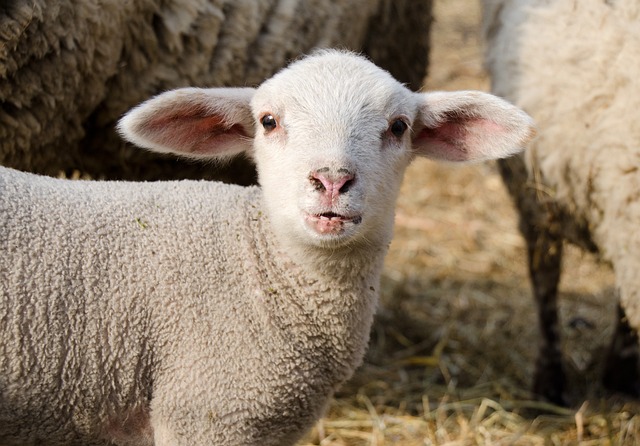 bread from the first day until the seventh day, that soul shall be cut off from Israel. (16) And in the first day there shall be an holy convocation, and in the seventh day there shall be an holy convocation to you; no manner of work shall be done in them, save that which every man must eat, that only may be done of you…”
Leviticus 23:6 adds, “And on the fifteenth day of the same month is the feast of unleavened bread unto the LORD: seven days ye must eat unleavened bread.”
The Jews go from Nisan 15-22 when the Bible indicates that it was to go from the 14th-21st. How do the Jews reconcile this?
Yehuda Shurpin, writing for Chabad.org, explains. “What is this “Passover” on the 14th? It is not the Festival of Matzahs (unleavened bread), since that only begins that evening (since the Jewish days begin at nightfall). Rather, it is the Passover offering, which was slaughtered on the 14th and eaten that night—the 15th—together with matzah at the onset of the Festival of Matzahs.
“Oddly, although the weeklong celebration is consistently called the Festival of Matzahs in the Torah (first 5 books of Moses), it has come to be known as Pesach, or Passover, in common parlance and even in our liturgy. Why is that?
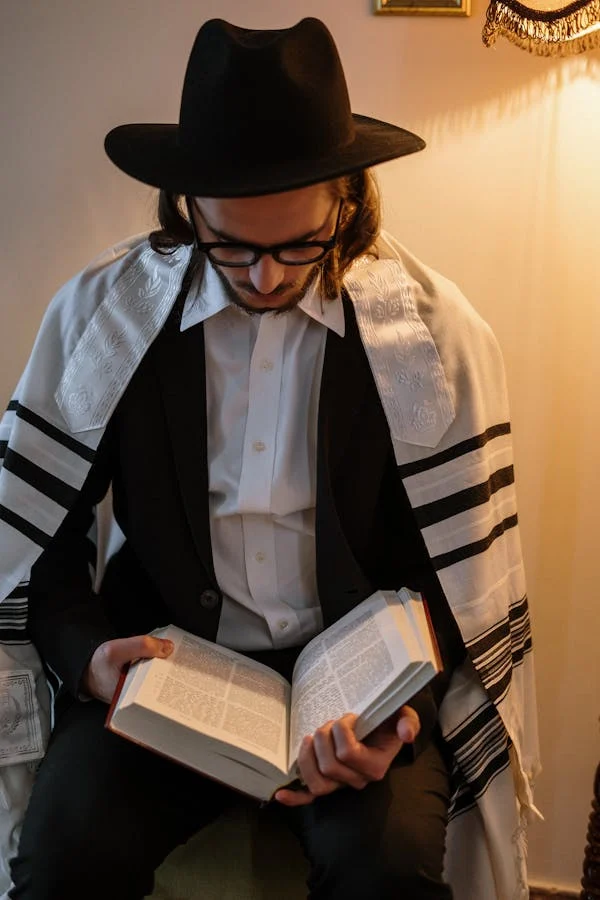 “Rabbi Levi Yitzchak of Berditchev has a beautiful explanation for this: We, as G‑d’s children, love Him deeply and refer to the holiday as Pesach, Passover, because G‑d “passed over” our homes and spared us when he was smiting the Egyptian firstborns. G‑d, the ever-loving parent, calls it Chag Hamatzot, a reference to our preparing matzah in anticipation of our redemption, relying on G‑d to provide for us. G‑d uses the name that recalls our goodness, and we use the name that recalls His kindness to us.”2
Should Gentiles celebrate this Passover? There’s nothing wrong with remembering and commemorating great Biblical events. However, Jesus said in Matthew 5:17, “Think not that I am come to destroy the law, or the prophets: I am not come to destroy, but to fulfil.”
We must remember that Passover, along with all the Old Testament feasts, was used to prepare for something that would be coming in the future. Jesus Christ fulfilled the meaning of the Passover when He was crucified as the perfect Lamb of God for the sins of the world. 1 Corinthians 5:7 reminds us, “…For even Christ our passover is sacrificed for us.” All who have accepted Jesus as their Savior have figuratively applied the blood of the Lamb to the doorposts of their lives.
When we celebrate the Lord’s Table (communion), we are celebrating something that the Lord instituted in Matthew 26:26-29. “And as they were eating, Jesus took bread, and blessed it, and brake it, and gave it to the disciples, and said, Take, eat; this is my body. (27) And he took the cup, and gave thanks, and gave it to them, saying, Drink ye all of it; (28) For this is my blood of the new testament, which is shed for many for the remission of sins. (29) But I say unto you, I will not drink henceforth of this fruit of the vine, until that day when I drink it new with you in my Father’s kingdom.”
Got Questions Ministries writes of this event: “He declared that the bread spoke of His body which would be broken. There was not a broken bone, but His body was so badly tortured that it was hardly recognizable (Psalm 22:12-17; Isaiah 53:4-7). The [fruit of the vine] spoke of His blood, indicating the terrible death He would soon experience. He, the perfect Son of God, became the fulfillment of the countless Old Testament prophecies concerning a Redeemer (Genesis 3:15; Psalm 22; Isaiah 53). When He said, “Do this in remembrance of me,” He indicated this was a ceremony that must be continued in the future. It indicated also that the Passover, which required the death of a lamb and looked forward to the coming of the Lamb of God who would take away the sin of the world, was fulfilled in the Lord’s Supper.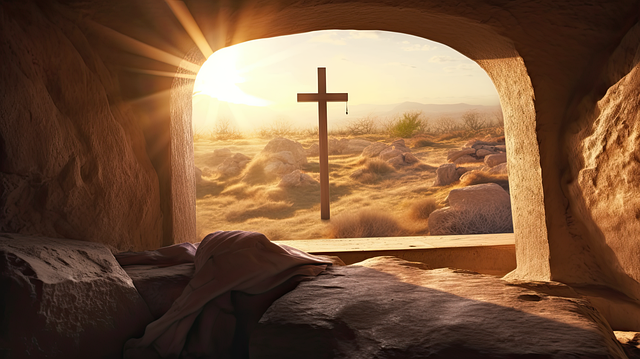
“The New Covenant replaced the Old Covenant when Christ, the Passover Lamb (1 Corinthians 5:7), was sacrificed (Hebrews 8:8-13). The sacrificial system was no longer needed (Hebrews 9:25-28). The Lord’s Supper/Christian Communion is a remembrance of what Christ did for us and a celebration of what we receive as a result of His sacrifice.”3
1https://www.chabad.org/library/article_cdo/aid/526875/jewish/The-Jewish-Calendar-Year.htm
2https://www.chabad.org/holidays/passover/pesach_cdo/aid/3283921/jewish/Why-Is-Passover-on-Nissan-15-Not-Nissan-14.htm
3https://www.gotquestions.org/communion-Christian.html
Images are taken from https://pixabay.com/, https://www.pexels.com/, or https://unsplash.com/images or created in Windows Copilot. According to the websites, they are Royalty Free and free to be used for our purposes.
