

Here is a 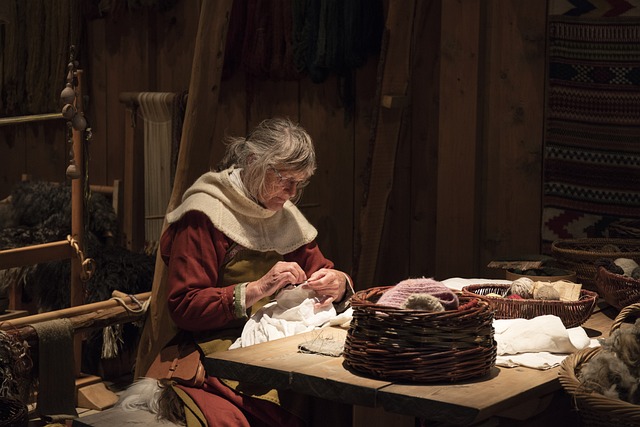 devotional that will keep you in stitches. It’s the story about one of the most revolutionary inventions to ever hit the market — the sewing machine. For centuries, sewing was done by hand with a needle and thread. Seamstresses and tailors put hours into the production of a single garment. The introduction of the sewing machine speeded up the work and made the production of multiple outfits possible in shorter amounts of time.
In the history of sewing machines, what is agreed upon is that in 1790, Thomas Saint received the first patent for a sewing machine. He neither advertised his invention nor did much to perfect it. However, it sparked an interest in other inventors. From there, the history of sewing machines gets a bit murky.
“Walter Hunt invented the first American lockstitch sewing machine in 1832. John Greenough patented the first sewing machine in the United States in 1842.”1 According to other sources, Elias Howe is credited with inventing the first lockstitch sewing machine in 1845.2 Perhaps the differentiating element is that Howe’s machine incorporated improved elements of all the other designs. Though none of these are names we probably recognize, there is a name that stands out in the sewing world: Isaac Merritt Singer.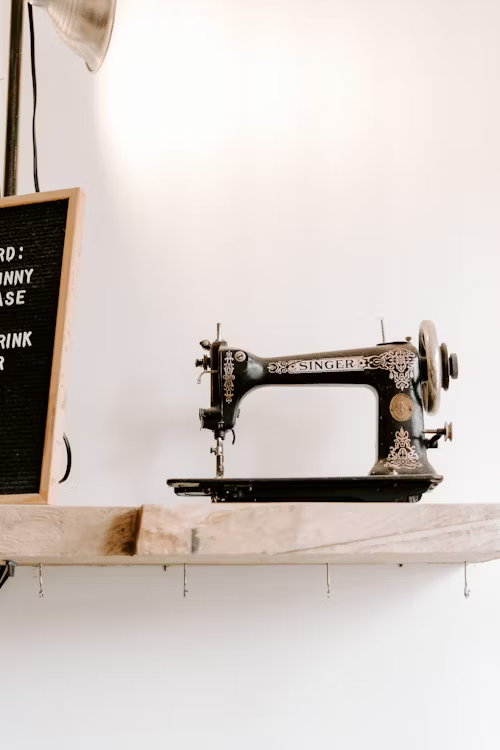
“Singer had seen a rotary sewing machine being repaired in a Boston shop. As an engineer, he thought it was clumsy and decided to design a better one. The machine he devised used a falling shuttle instead of a rotary one; the needle was mounted vertically and included a presser foot to hold the cloth in place. It had a fixed arm to hold the needle and included a basic tension system. This machine combined elements of Thimonnier, Hunt and Howe’s machines. Singer was granted an American patent in 1851. The foot treadle used since the Middle Ages,[11] used to convert reciprocating to rotary motion, was adapted to drive the sewing machine, leaving both hands free.”3
Singer was taken to court by Howe for patent infringement. Howe won the case in 1854 and Singer was forced to pay $1.15 per machine that he sold directly to Howe. Eventually, the two entered a partnership and Singer’s redesign of Howe’s product won over the market. Today, Singer is synonymous with sewing.
So is the name Dorcas.
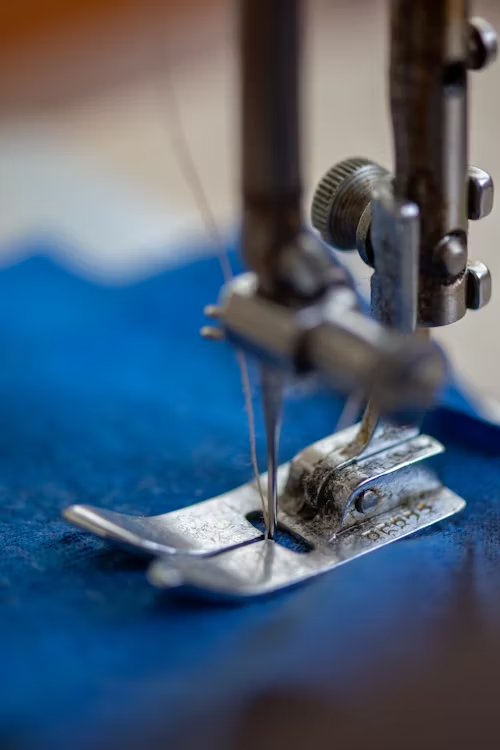 Acts 9:36-39 gives the beginnings of the story. “Now there was at Joppa a certain disciple named Tabitha, which by interpretation is called Dorcas: this woman was full of good works and almsdeeds which she did. (37) And it came to pass in those days, that she was sick, and died: whom when they had washed, they laid her in an upper chamber. (38) And forasmuch as Lydda was nigh to Joppa, and the disciples had heard that Peter was there, they sent unto him two men, desiring him that he would not delay to come to them. (39) Then Peter arose and went with them. When he was come, they brought him into the upper chamber: and all the widows stood by him weeping, and shewing the coats and garments which Dorcas made, while she was with them.”
Dorcas has used her God given skills as a seamstress to minister to others. Her work impacted their lives and when she was gone, all they had were the garments to remind them of her devotion.
As you continue reading the story, you find that Dorcas was raised to life by God through Peter. The miracle resulted in many believing on the Lord. I’m sure Dorcas went back to working, still being “full of good works and almsdeeds.”
While you may not be able to sew, God has given you some skill, gift, or ability with which you can be a blessing to others. You may have never even considered it that way but after reading this story, you know that you are making a difference in the lives of others.
Give God the glory and keep on sewing – or whatever it is you do.
1https://www.nationaldaycalendar.com/national-day/national-sewing-machine-day-june-13
2https://www.asme.org/topics-resources/content/elias-howe
3https://en.wikipedia.org/wiki/Sewing_machine
Images are taken from https://pixabay.com/, https://www.pexels.com/, or https://unsplash.com/images or created in Windows Copilot. According to the websites, they are Royalty Free and free to be used for our purposes.
