
 Today is what is known globally as Good Friday. It is the day allegedly when Jesus was crucified. I say allegedly because a Friday crucifixion doesn’t fit with a Sunday morning resurrection since Jesus had to be in the grave three days and three nights. I’m not going to explain nor debate that in this devotional. Instead, I want us to think about what took place for Jesus when He was crucified.
Dr. Tommy Mitchell, a Fellow of the American College of Physicians and a speaker for Answers In Genesis, earned his MD from Vanderbilt University School of Medicine and practiced medicine for over 20 years. He wrote an article for Answers in Genesis that describes what Jesus did for us. It will be split over the next two days. Take time to carefully read it. Seeing what Jesus endured for us is a reminder of just how much He loves us.
In the Garden
The suffering began soon after the Last Supper when Jesus and His disciples went to the Garden of Gethsemane. Knowing that the time of His death was near, Jesus prayed intently. According to Luke 22:44, “And being in an agony he prayed more earnestly: and his sweat was as it were great drops of blood falling down to the ground.”
Medical literature documents that bloody sweat, known as hematidrosis, does occur. This condition is seen in rare instances of extreme emotional stress. The resulting blood loss is not severe, but it does cause the skin to be exquisitely tender, making what was to come even more painful.
During His Trials
After these hours of emotional distress in the garden, Jesus was betrayed and arrested. His captors mocked and beat Him after He faced the Sanhedrin and the Roman authorities. He was ultimately sentenced to crucifixion on a cross.
Before sentencing Jesus to death, Pilate attempted to appease the Jews by having Him beaten. John 19:1 notes, “Then Pilate therefore took Jesus, and scourged him.” However, this brief description does not communicate the brutal nature of what was to follow.
Scourging was a particularly vicious form of punishment. The victim was stripped of his clothes, and his hands were raised above his head and tied to a post. Then one or two soldiers would repeatedly beat the victim with a whip, usually made of several leather strips with jagged pieces of iron or sheep bone tied onto them.
One blow after another was delivered across the shoulders, back, and buttocks. Initial blows ripped gashes into His already tender skin, and those that followed dug deeper into our Savior’s tissues, tearing muscles and blood vessels. The subsequent blood loss further weakened Him. Torn and exposed nerves on the back caused indescribable pain.
This brutal scourging was only the beginning of Jesus’s suffering. After being untied from the blood-stained scourging post, the soldiers placed a scarlet robe on Him. Each breath, each movement of His body, caused the robe to rub against His torn flesh. Then a crown of thorns was placed on His head. As the trained Roman soldiers beat Him, these thorns drove deeper into His head, causing profuse bleeding and intense pain. Later, the scarlet robe was torn from His back, reopening the deep wounds.
How horrible was Jesus’s suffering at this point? Isaiah 52:14 says, “As many were astonied at thee; his visage was so marred more than any man, and his form more than the sons of men.” Jesus had been so severely beaten, He no longer looked like a human being.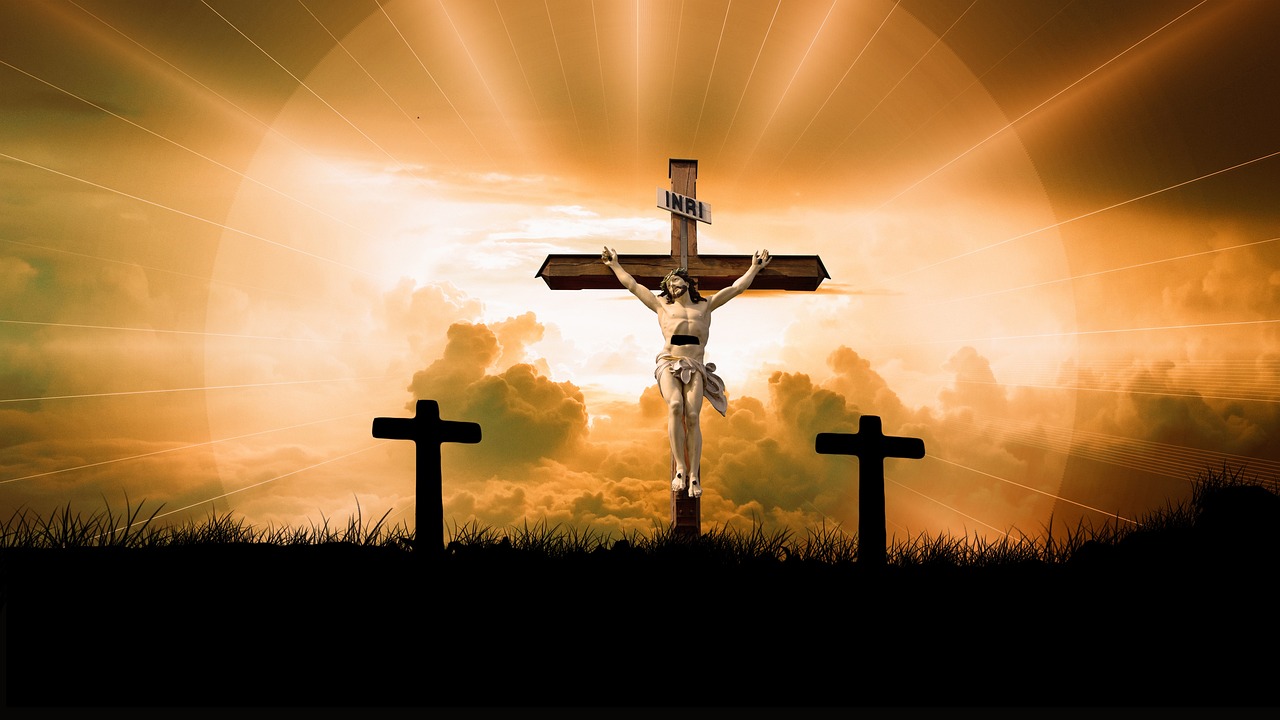
To the Cross
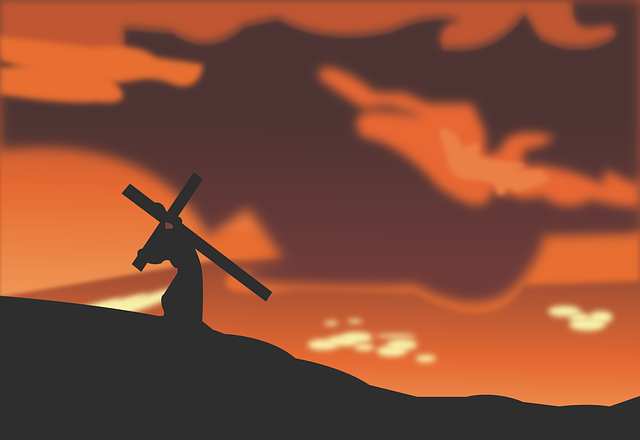
Jesus was then led to Calvary. In His weakened physical condition He was apparently unable to carry His crossbeam to the place of crucifixion. Simon, a Cyrenian, bore the crossbeam for Him. Nonetheless, each step must have been agonizing, as the jarring aggravated the pain in the open wounds on Jesus’s back.
On arrival at the crucifixion site, the soldiers laid Jesus on His back against the crossbeam. As His back and shoulders rubbed against the beam, the wood must have dug into the open wounds, intensifying His pain. Next, the soldiers stretched His arms out and nailed His hands to the cross.
As they raised the crossbar and placed it upon the upright post of the cross, the jolt must have caused unimaginable agony. Then His knees were flexed and His feet placed one on top of the other. In a typical crucifixion, a nail was then driven though the feet, fixing them to the cross.
At this point every movement of Jesus’s body would bring pain. The weight of the body pulling on the outstretched hands, pain shooting through the arms and shoulders, the weight of the body pushing down on the nailed feet—all intensified the agony.
In addition to the intense pain, victims of crucifixion experienced great difficulty breathing. Normally when you breathe, the ribs raise, then passively recoil downward as you breathe out. But if your arms are outstretched and the full weight of your body is hanging down, the ribs would be elevated at all times. The natural recoil is difficult to achieve on the cross.
As a result, the victim has to work both to inhale and exhale. Breathing out would require Jesus to push up on His feet nailed to the cross, causing extreme pain. As blood loss continued and pain took its toll on the body, breathing became progressively more difficult.
To hasten the death of those condemned to the cross, soldiers often broke the legs of their victims. This resulted in suffocation. In fulfillment of prophecy, though, the soldiers did not need to break Jesus’s legs because He had died just a few hours after being placed on the cross.
To be continued tomorrow. For now, reflect on the simple words found in Ephesians 2:4. “But God, who is rich in mercy, for his great love wherewith he loved us…”
https://answersingenesis.org/jesus/crucifixion/our-suffering-savior/
Images are taken from https://pixabay.com/, https://www.pexels.com/, or https://unsplash.com/images or created in Windows Copilot. According to the websites, they are Royalty Free and free to be used for our purposes.
