

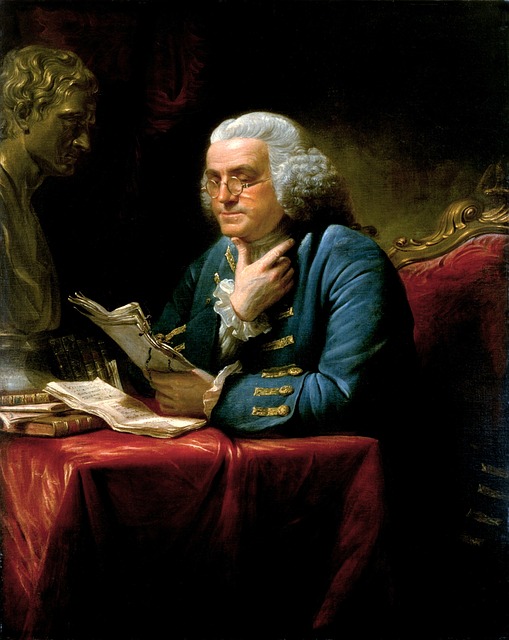
 When we think of our nation’s forefathers, we tend to esteem them with high regard. One of those characters is Benjamin Franklin. In 1774, Franklin got fired from his job as postmaster for Britain because of his political and revolutionary activities. However, he was back in the postal business again a year later on this day in 1775 when the Second Continental Congress appointed Franklin as our first Postmaster General.
Franklin had been one of two Philadelphia postmasters in 1753 when the colonies were getting established. During his time, he made numerous improvements to the mail delivery system. While there wasn’t the volume of mail being sent back and forth in those days compared to today, Franklin’s ideas spawned procedure that is still in use today.
For instance, Franklin introduced standardized rate scales, establishing costs for mail and packages based on weight and distance. He also established a better routing system which expedited mail delivery.
“Franklin held the job until late in 1776, when he was sent to France as a diplomat. He left a vastly improved mail system, with routes from Florida to Maine and regular service between the colonies and Britain. President George Washington appointed Samuel Osgood, a former Massachusetts congressman, as the first postmaster general of the American nation under the new U.S. constitution in 1789. At the time, there were approximately 75 post offices in the country.
“Today, the United States has over 40,000 post offices and the postal service delivers more than 200 billion pieces of mail each year to over 144 million homes and businesses in the United States, Puerto Rico, Guam, the American Virgin Islands and American Samoa. The postal service is the nation’s largest civilian employer, with roughly 500,000 career workers. The postal service is a not-for-profit, self-supporting agency that covers the majority of its expenses through postage (stamp use in the United States started in 1847) and related products. The postal service gets the mail delivered, rain or shine, using everything from planes to mules.”1
The first time the word “letter” is used in the Bible is found in 2 Samuel 11:14-15. This letter did not contain the best news! “And it came to pass in the morning, that David wrote a letter to Joab, and sent it by the hand of Uriah. (15) And he wrote in the letter, saying, Set ye Uriah in the forefront of the hottest battle, and retire ye from him, that he may be smitten, and die.” David wrote Uriah’s death sentence and sent it in the mail.
The writer of Hebrews gives us the last occurrence of the word “letter” in Hebrews 13:22. “And I beseech you, brethren, suffer the word of exhortation: for I have written a letter unto you in few words.” David Guzik writes in the Enduring Word Commentary, “The writer to the Hebrews reminds us of his purpose. His desire was to write a word of exhortation to encourage discouraged Christians, both then and now.”
How great would it have been to receive one of these encouraging and instructional letters?!? Now, here’s a twist that many of you are familiar with. The word letter in the Bible is the Greek word epistole. In other passages, the English word isn’t changed much and we have the word epistle. An epistle is simply a letter written by inspiration of God through a human author and “mailed” to a particular church or group of believers.
The final time epistle is found in the Bible is in 2 Peter 3:15-16. “And account that the longsuffering of our Lord is salvation; even as our beloved brother Paul also according to the wisdom given unto him hath written unto you; (16) As also in all his epistles, speaking in them of these things; in which are some things hard to be understood, which they that are unlearned and unstable wrest, as they do also the other scriptures, unto their own destruction.”
The Believer’s Bible Commentary has a great thought on this passage. “Paul spoke of the great truths with which Peter has been dealing in his two Letters; truths such as the new birth, the deity of Christ, His life of sinless suffering, His substitutionary death, His  resurrection, His ascension, His coming again, the Day of the Lord and the eternal state.
“Some Bible truths are hard to understand, such as the Trinity, God’s election and man’s free will, the mystery of suffering, etc. It should not disturb us if we find matters in the Bible which are above our understanding. The word of God is infinite and inexhaustible. In studying it we must always be willing to give God credit for knowing things which we can never fully fathom.
“Peter is not criticizing Paul’s writings when he speaks of things hard to understand. It is not Paul’s style of writing which is difficult to understand but the subjects which he treats. Barnes writes: “Peter refers not to the difficulties of understanding what Paul meant, but to the difficulty of comprehending the great truths which he taught.”
“Instead of accepting them simply by faith, untaught and unstable people twist some of these difficult truths to their own destruction. Some false cults, for instance, twist the law into a way of salvation rather than a revealer of sin. Others make baptism the door to heaven. They do this not only with Paul’s writings but with other Scriptures as well.”2
Today, the best letter we will receive is the Word of God. In its entirety, it is God’s love letter to His children. Read it over and over, clinging to the infallible words, heeding the instructions and warnings, and basking in the glow of God’s love for us.
“But grow in grace, and in the knowledge of our Lord and Saviour Jesus Christ. To him be glory both now and for ever. Amen.” (2 Peter 3:18)
1https://www.history.com/this-day-in-history/july-26/u-s-postal-system-established
2Believer’s Bible Commentary, MacDonald, William, Farstad, Arthur (editor), e-Sword.net module
Images are taken from https://pixabay.com/, https://www.pexels.com/, or https://unsplash.com/images or created in Windows Copilot. According to the websites, they are Royalty Free and free to be used for our purposes.
