

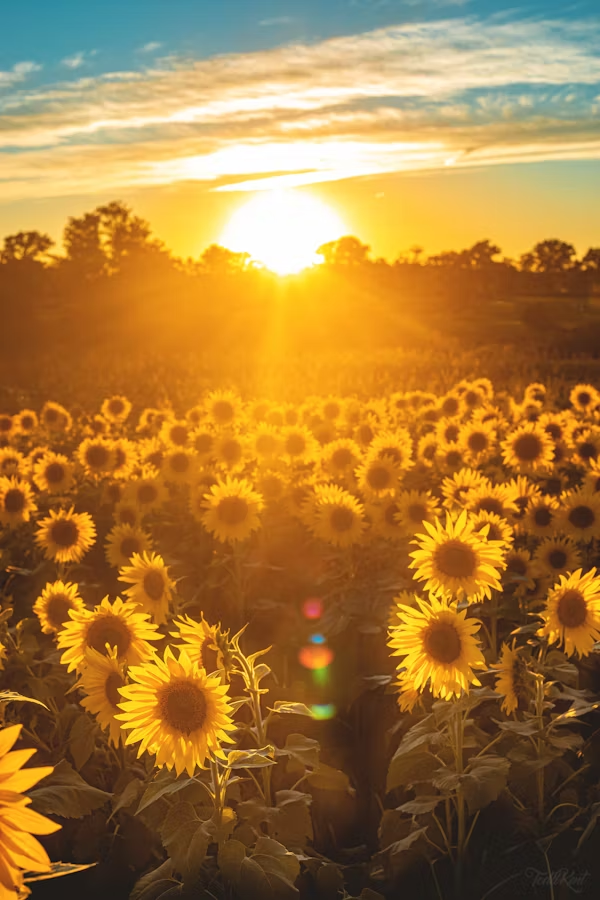
 Look! Up in the air! It’s a bird…it’s a plane…it’s the sun!! I hope today is a bright sunny day so that this devotional has its own visual aid. With a good, dark pair of sunglasses protecting your eyes, take a brief look at the sun and just consider how amazing it is.
We are approximately 93 miles from the sun. The closest we’ve ever been able to get was in 2021 with NASA’s Parker Solar Probe. “For the first time in history, a spacecraft has touched the Sun. NASA’s Parker Solar Probe has now flown through the Sun’s upper atmosphere – the corona – and sampled particles and magnetic fields there.”1 It was still 4.3 million miles from the surface of the sun!
God created the sun on day four of creation week. Genesis 1:14-19 says, “And God said, Let there be lights in the firmament of the heaven to divide the day from the night; and let them be for signs, and for seasons, and for days, and years: (15) And let them be for lights in the firmament of the heaven to give light upon the earth: and it was so. (16) And God made two great lights; the greater light to rule the day, and the lesser light to rule the night: he made the stars also. (17) And God set them in the firmament of the heaven to give light upon the earth, (18) And to rule over the day and over the night, and to divide the light from the darkness: and God saw that it was good. (19) And the evening and the morning were the fourth day.”
The size of the sun is hard to fathom. Scientists estimate that you could squeeze 1.3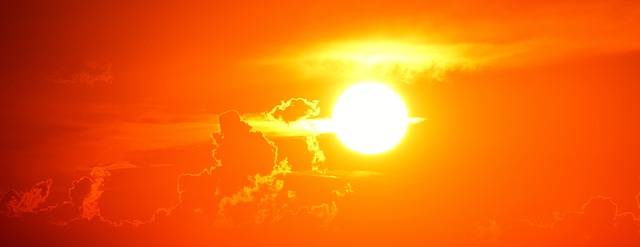 million earths in the sun.
The atmosphere of the sun is hotter than the core. Scientists believe the surface of the sun is around 10,000 degrees Fahrenheit but the atmosphere is around 3.6 million degrees Fahrenheit. Since we’ve never reached the surface of the sun, I’m not sure how they came to that conclusion.2
“Without any orbit, Earth would likely go crashing directly into the sun. That’s because our planet’s path around that big, bright star in the sky is what keeps Earth from being pulled in directly by the sun’s gravity. Picture yourself throwing a tennis ball off a roof. The harder you throw it, the faster the ball moves and the farther it travels before being pulled to the ground. Our giant tennis ball of a planet moves around the sun at a crisp 18.5 miles (29.8 kilometers) per second. It’s constantly falling toward the sun, but moving too fast to actually reach it. All that would change pretty fast if the orbit stopped, burning up the planet and everything on it as the planet moved increasingly closer to the sun.
“A less dramatic shift in Earth’s orbit would primarily affect the planet’s temperature. The closer you are to the sun, the hotter the climate. Even a small move closer to the sun could  have a huge impact. That’s because warming would cause glaciers to melt, raising sea levels and flooding most of the planet. Without land to absorb some of the sun’s heat, temperatures on Earth would continue to rise. Temperatures also would see a boost from rising levels of the carbon dioxide and vapors that the oceans released into the air.
“Conversely, a shift in the orbit moving Earth farther from the sun would cool and potentially freeze the planet. Oceans would be covered in ice, causing them to release less carbon dioxide and vapor. It would also make years longer; the farther the planet is from the sun, the longer it takes to complete its annual orbit.”3
Amazing! And to think that such delicate precision and placement of this hot plasma star happened through a cosmic Big Bang! People who will believe that will believe anything!
Ten simple, easy-to-comprehend words are all we need to know about the creation of this world. Accept and believe these and you won’t have any problem accepting the words that follow.
“In the beginning God created the heaven and the earth.” (Genesis 1:1)
1https://www.nasa.gov/solar-system/nasa-enters-the-solar-atmosphere-for-the-first-time-bringing-new-discoveries/
2https://interestingfacts.com/sun-facts/
3https://science.howstuffworks.com/science-vs-myth/what-if/what-if-earth-changed-its-orbit.htm
Images are taken from https://pixabay.com/, https://www.pexels.com/, or https://unsplash.com/images or created in Windows Copilot. According to the websites, they are Royalty Free and free to be used for our purposes.
