

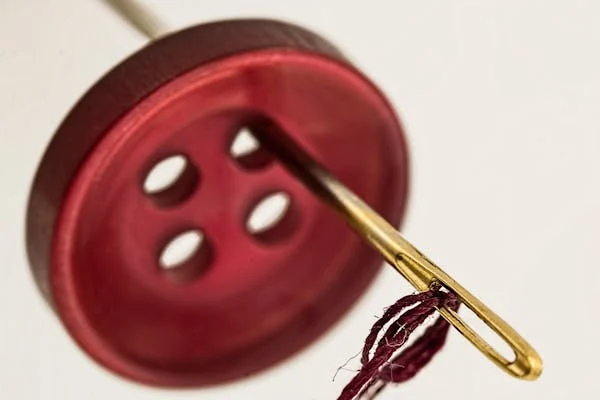
 Today is an odd celebration on the National Day Calendar. This is National Thread The Needle Day. How easily can you thread the needle?
This phrase has several meanings. The original meaning has a seamstress sucking an end of thread to a point and carefully eyeballing the eye of a needle. Possibly, one eye is closed as the difficult task of threading a needle begins. The diameter of your average household mending thread is .0059 inches, so it takes a steady hand and usually a couple of attempts.
A politician may try to thread the needle, carefully navigating their political viewpoint through a maze of opposing views.
While playing pool, you might thread the needle, shooting the cue ball through a tight spot in order to sink your target ball into a pocket.
Athletes thread the needle, deftly running or dribbling a ball through the other team’s defense without creating a turnover.
Ultimately, the phrase could be summarized as getting something through a small opening. This makes the Biblical reference a bit comical to imagine. Matthew 19:23-24 records, “Then said Jesus unto his disciples, Verily I say unto you, That a rich man shall hardly enter into the kingdom of heaven. (24) And again I say unto you, It is easier for a camel to go through the eye of a needle, than for a rich man to enter into the kingdom of God.” Mark and Luke also recorded this.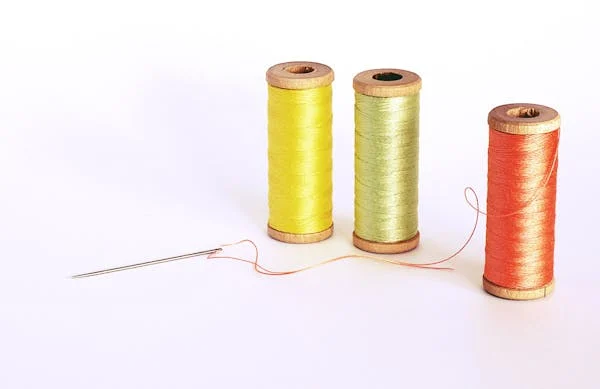
Spurious explanations have been floated for centuries. “Some theorize that the needle Jesus was speaking of was the Needle Gate, supposedly a low and narrow after-hours entrance found in the wall surrounding Jerusalem. It was purposely small for security reasons, and a camel could only go through it by stripping off any saddles or packs and crawling through on its knees. The problem with this theory is there is no evidence such a gate ever existed. Beyond that, what sane camel driver would go through such contortions when larger gates were easily accessible?
“Others claim that the word translated “camel” (Greek: kamelos) should actually be “cable” (Greek: kamilos). Then the verse would read that it is easier for a cable (or rope) to go through the eye of a needle. To believe this, however, brings up more problems than it solves, namely casting doubt on the inerrancy and inspiration of Scripture.”1
The answer to the meaning is found in the context of the passage. If people would just keep reading, they wouldn’t have to come up with other explanations. Or, maybe, those who came up with the explanations didn’t like Jesus’ explanation. Let’s keep reading in the Scripture.
“When his disciples heard it, they were exceedingly amazed, saying, Who then can be saved? (26) But Jesus beheld them, and said unto them, With men this is impossible; but with God all things are possible.” (Matthew 19:25-26)
Jesus, the Master of EVERY language, uses a literary device called hyperbole. A hyperbole is an exaggeration that is given for emphasis. The Lord used this in Matthew 7 when talking about the “mote” (splinter) in a brother’s eye versus the “beam” in our own eye. It’s also used in Matthew 23 when Jesus says that the Scribes and Pharisees strain gnats but swallow camels. A cartoonist would have a great time creating images of these verses!
When Jesus talked about the camel going through the eye of a needle, He is talking about something that is impossible by man’s efforts. The hyperbolic illustration was used to show how impossible it is for ANYONE, rich or poor, to get into Heaven by their own efforts. “But with God all things are possible.”
I don’t know how God would do it but if He wanted to get a camel through the eye of a needle, He could do it. And, while I understand theologically and experientially how God gets the unsaved into Heaven through Jesus, the weight and depth of this truth is too much to fully grasp. I stand in awe and humbled by the mighty power of God.
 Today, take a sewing needle and hold it up to the light so that you can clearly see through the eye of the needle. See the difficulty of getting a thread through it. See the impossibility of you physically squeezing through it. It’s impossible to even get your pinky through! Then, focus on what Jesus said in our Matthew 19 passage. No wonder Paul wrote in Ephesians 2:8-9, “For by grace are ye saved through faith; and that not of yourselves: it is the gift of God: (9) Not of works, lest any man should boast.”
1https://www.gotquestions.org/camel-eye-needle.html
Images are taken from https://pixabay.com/, https://www.pexels.com/, or https://unsplash.com/images or created in Windows Copilot. According to the websites, they are Royalty Free and free to be used for our purposes.
