

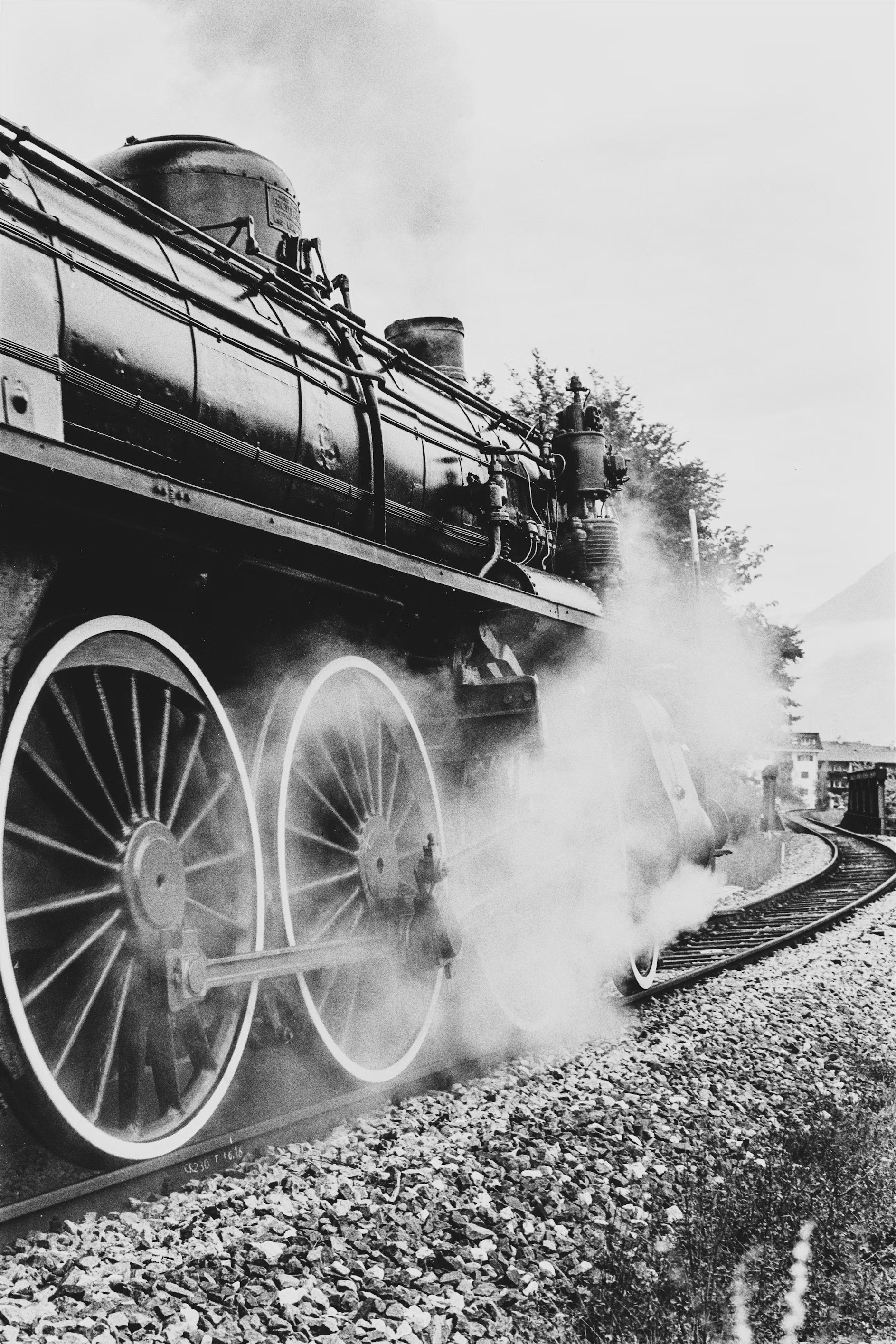
 Two events ironically happened on this day, separated by 148 years. The first event happened in 1833. President Andrew Jackson became the first president to ride an Iron Horse, the name given to steam powered locomotives, a relatively new transportation mode in the United States introduced in 1830. Jackson boarded the B&O (Baltimore and Ohio) Railroad train just two years after it had completed its line from Baltimore to Frederick, Maryland. This journey was viewed as a presidential stamp of approval and faith in the railway system that was quickly taking over America.
The railway effectively put the Pony Express out of business. By 1840, there was 2,808 miles of steel laid across various parts of the nation. In 1869, the Transcontinental Railroad was completed, linking the east and the west together and allowing people to travel the distance relatively quickly by 1800s’ standards. Today, “running on almost 140,000 route miles, the U.S. freight rail network is widely considered the largest, safest, and most cost-efficient freight system in the world.”1
You might think otherwise when considering what happened on this day in 1981.
Bihar, India. A “nine-car train, filled with approximately 1,000 passengers, was traveling through the northeastern state of Bihar about 250 miles from Calcutta. Outside, monsoon-like conditions were battering the region. Extremely hard rains were swelling the rivers and making the tracks slick.
“As the train approached the bridge over the Bagmati River, a cow crossed the tracks. Possibly seeking to avoid harming the cow, the engineer braked too hard. The cars slid on the wet rails and the last seven cars derailed straight into the river. With the river far above normal levels, the cars sank quickly in the murky waters.
“Rescue help was hours away and, by the time it arrived, nearly 600 people had lost their lives. After a multi-day search, 286 bodies were recovered but more than 300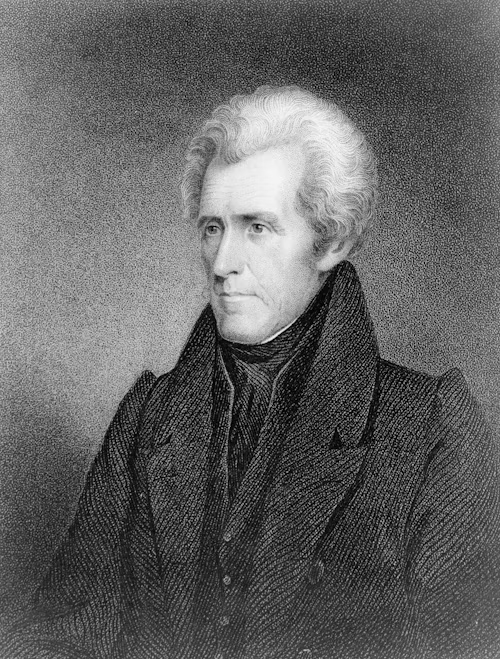 missing people were never found. The best estimate is that close to 600 passengers were killed by the engineer’s decision. Cows are considered sacred animals, according to the Hindu religion.”2
“According to Federal Railroad Administration data, over the past decade, there have been roughly 2,000 train collisions resulting in around 250 deaths each year in the United States (via Operation Lifesaver: Rail Safety Education). Most of these are between locomotives and passenger vehicles or other obstacles at the intersection of tracks and roads. Fortunately, these numbers reflect a significant decrease in deadly rail incidents since the 1980s, when there were, on average, 7,000 collisions with 600 deaths each year.”3
Perhaps Jackson shouldn’t have been so quick to get on that train. Maybe the rest of us should stay off trains. However, when you consider other statistics, you find that the deadliest form of travel is a motorcycle, nearly 30 times greater than death in an automobile which comes in as the second most deadly way to travel.
The safest mode of transportation is an airplane, beating out the school bus by a mere .3 percentage points. For years, we have been told in our annual school bus in-service meetings that the school bus is the safest means of transportation for the kids – since we can’t fly them to school.
What’s the point of this devotional? Jackson could have lived in fear of riding trains, setting a precedent of skepticism for America. We could live in fear of cars, motorcycles, planes, or trains. But the bottom line is that when God says it’s our time to go, it’s our time to go. We could trip walking down a sidewalk and bash our skull. We could fall off our bicycle. We could fall down the stairs. We could fall off a chair.  Do you see what I’m driving at? (no pun intended)
Job asks in Job 7:1, “Is there not an appointed time to man upon earth? are not his days also like the days of an hireling?” In Job 14:5, he declares, “Seeing his days are determined, the number of his months are with thee, thou hast appointed his bounds that he cannot pass…”
Knowing this, the Psalmist says in Psalms 90:10, 12, “The days of our years are threescore years and ten; and if by reason of strength they be fourscore years, yet is their strength labour and sorrow; for it is soon cut off, and we fly away… (12) So teach us to number our days, that we may apply our hearts unto wisdom.”
Whatever the quantity of days we have been given, we must LIVE them and live them wisely. Fear cannot be allowed to govern us. God knows WHEN our life will end and HOW. He has chosen not to reveal that to us (Thank you, Lord!) and has simply told us to number our days. Imagine that today was your last and live it to the fullest for the Glory of the Lord!
1https://railroads.dot.gov/rail-network-development/freight-rail-overview
2https://www.grunge.com/1094089/the-deadliest-train-accidents-in-history/
3https://www.grunge.com/1094089/the-deadliest-train-accidents-in-history/
Images are taken from https://pixabay.com/, https://www.pexels.com/, or https://unsplash.com/images or created in Windows Copilot. According to the websites, they are Royalty Free and free to be used for our purposes.
