

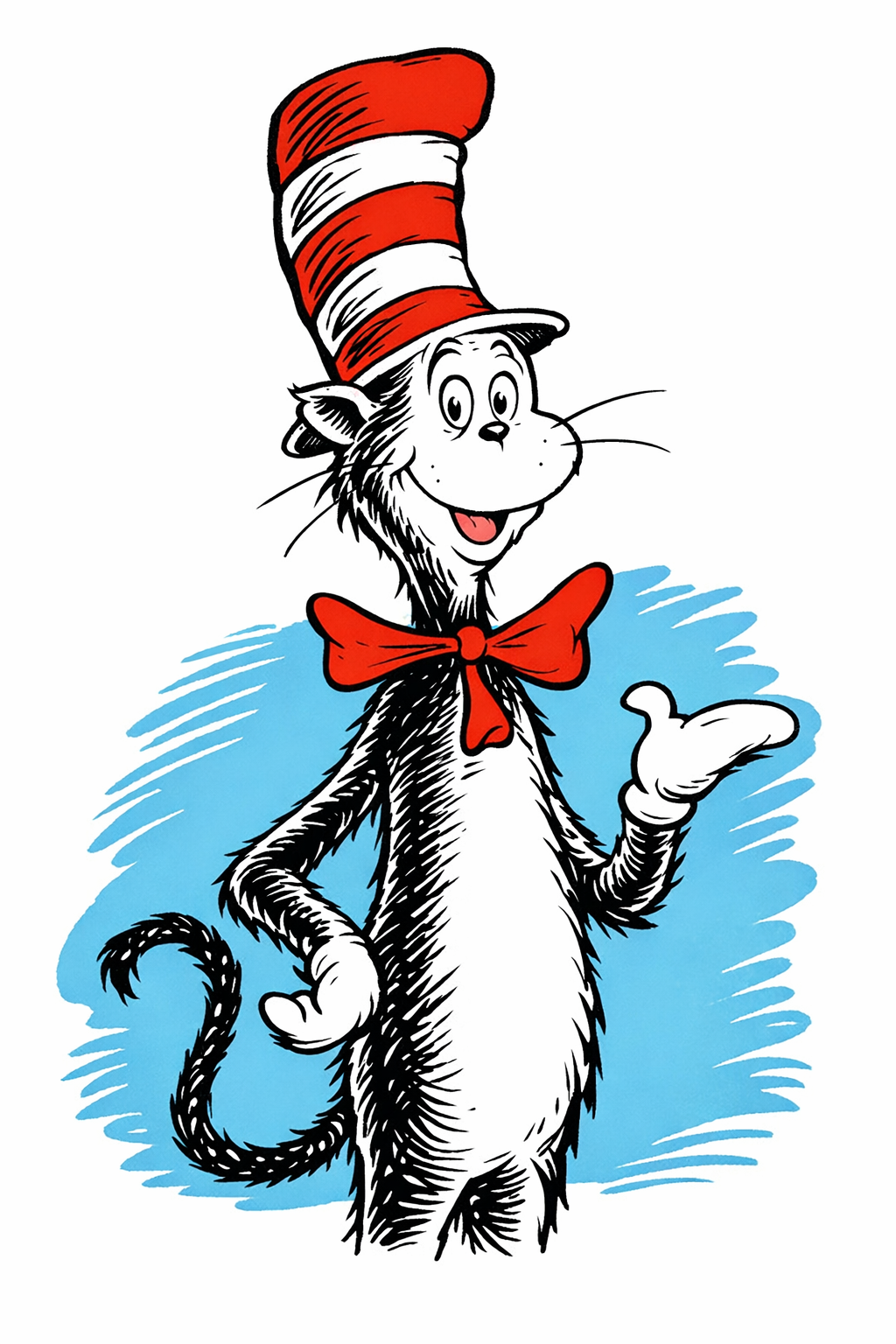
 Some of you are going to adamantly disagree with a statement I’m about to make. Others will agree wholeheartedly. Here’s goes: I do not like poetry! Never did. Doubt that I ever will. The closest thing to poetry that I enjoy is Dr. Seuss.
Here is a poem in the style of Dr. Seuss that describes my aversion to the literary style:
I do not like poetry.
Not in the spring, nor the frost of the fall.
Not in a book, not read in a chair,
Not with a whisper, not with a stare.
I will not read it in socks or in shoes,
I will not read it with yesterday’s news.
I will not read it on trains or in cars,
I will not read it beneath the stars.
I do not like rhymes that bounce or that bop,
I do not like lines that skip or that hop.
I do not like verses that twist or that turn,
I do not like stanzas that smolder or burn.1
Now that’s A-1 classy poetry right there!
Some folks hear a meaningful poem and their eyes glisten with tears, their breath is taken away, and the emotions run into overdrive. I see someone doing this and I’m giving them the side-eye, wondering what’s wrong with them and what am I missing, especially if this reaction comes from a guy? I just don’t get it. And going to a poetry reading?!? I think I’d rather watch paint dry or the grass grow.
From elementary days, we were introduced to the different forms of poetry and had to attempt to write something in a particular style. Limericks, haikus, odes, and sonnets are forms I remember being taught. We were assured that knowing the great poets would enrich our lives and broaden our horizons, making us more cultured. I don’t think so! In fact, I can’t think of anyone I went to school with who is a better, more well rounded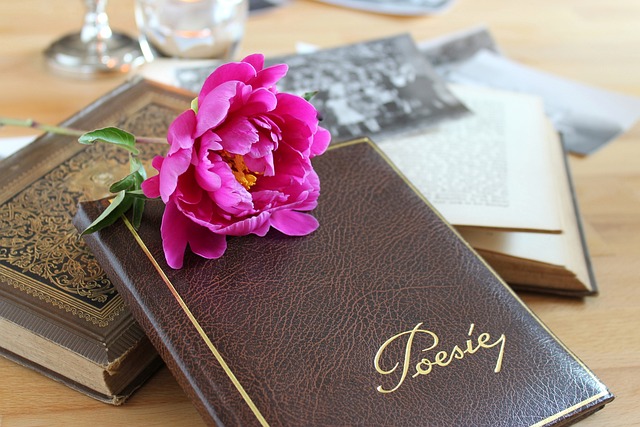 individual because they read Frost, Browning, Keats, Dickinson, Poe, Kipling, Byron, or Whitman.
Now, here’s something that might surprise you. There are five books of poetry that I love immensely. They are Job, Psalms, Proverbs, Ecclesiastes, and the Song of Solomon. Quite honestly, though, I’ve never understood why they are considered poetry.
Speaking of the Psalms, ministryvoice.com says that “Written in a variety of styles, the psalms employ parallelism, metaphor, and symbolism to convey their messages. Parallelism involves the repetition of similar or contrasting ideas, making the lines memorable and impactful. For example, Psalm 23:1-2 states, “The Lord is my shepherd; I shall not want. He maketh me to lie down in green pastures. He leadeth me beside the still waters.”2
GotQuestions Ministries gives another great explanation. “The descriptor poetic refers to literary form, yet many of the Old Testament prophets, whose works are not included in this category, also used poetry in the conveyance of their messages. Again, what sets these five books apart is their portrayal of the human experience—joy, love, pleasure, heartbreak, pain, relationships, loss, suffering, doubt, decision-making, and each individual’s need for intimacy with God. While Isaiah and Jeremiah cried out to a nation, the writings of the poetic books are intensely personal. Figuratively speaking, God’s prophets spoke through megaphones while God’s poets often spoke in whispers.”3
Job: Possibly the oldest book of the Bible, readers are given a ringside seat to the cosmic battle between good and evil.
Psalms: Commonly referred to as God’s hymnal, the book of Psalms is a collection of poetry penned by several writers over a span of about a thousand years.
Proverbs: Known as God’s treasury of wisdom, it would be nearly impossible to find a topic not mentioned in this vast collection of wise sayings written primarily by King Solomon.
Ecclesiastes: Written by Solomon, this book explores the emptiness of a life devoted to worldly pursuits and pleasures.
 Song of Solomon: While … this as an allegorical work symbolizing God’s love for His people, the Song of Solomon is [also] a story of love between a man and a woman—a lyrical poem of anticipation, expectation, and consummation.4
So, since today is National Great Poetry Reading Day, let me encourage you to read something from each of these poetic books. Let me help you begin by reading a powerful piece from Job that gives us encouragement in our day. Job 23:10-12 says, “But he knoweth the way that I take: when he hath tried me, I shall come forth as gold. (11) My foot hath held his steps, his way have I kept, and not declined. (12) Neither have I gone back from the commandment of his lips; I have esteemed the words of his mouth more than my necessary food.”
1This is a Google Copilot creation. Dr. Seuss would be so proud!
2https://www.ministryvoice.com/the-beauty-in-the-psalms-exploring-the-poetry-of-praise/
3https://www.gotquestions.org/poetic-books-of-the-Bible.html
4Ibid.
Images are taken from https://pixabay.com/, https://www.pexels.com/, or https://unsplash.com/images or created in Windows Copilot. According to the websites, they are Royalty Free and free to be used for our purposes.
